Vehicles
Browse the historic buses, support vehicles and maintenance equipment used around the Museum Tramway collection.
Amsterdam Vehicles
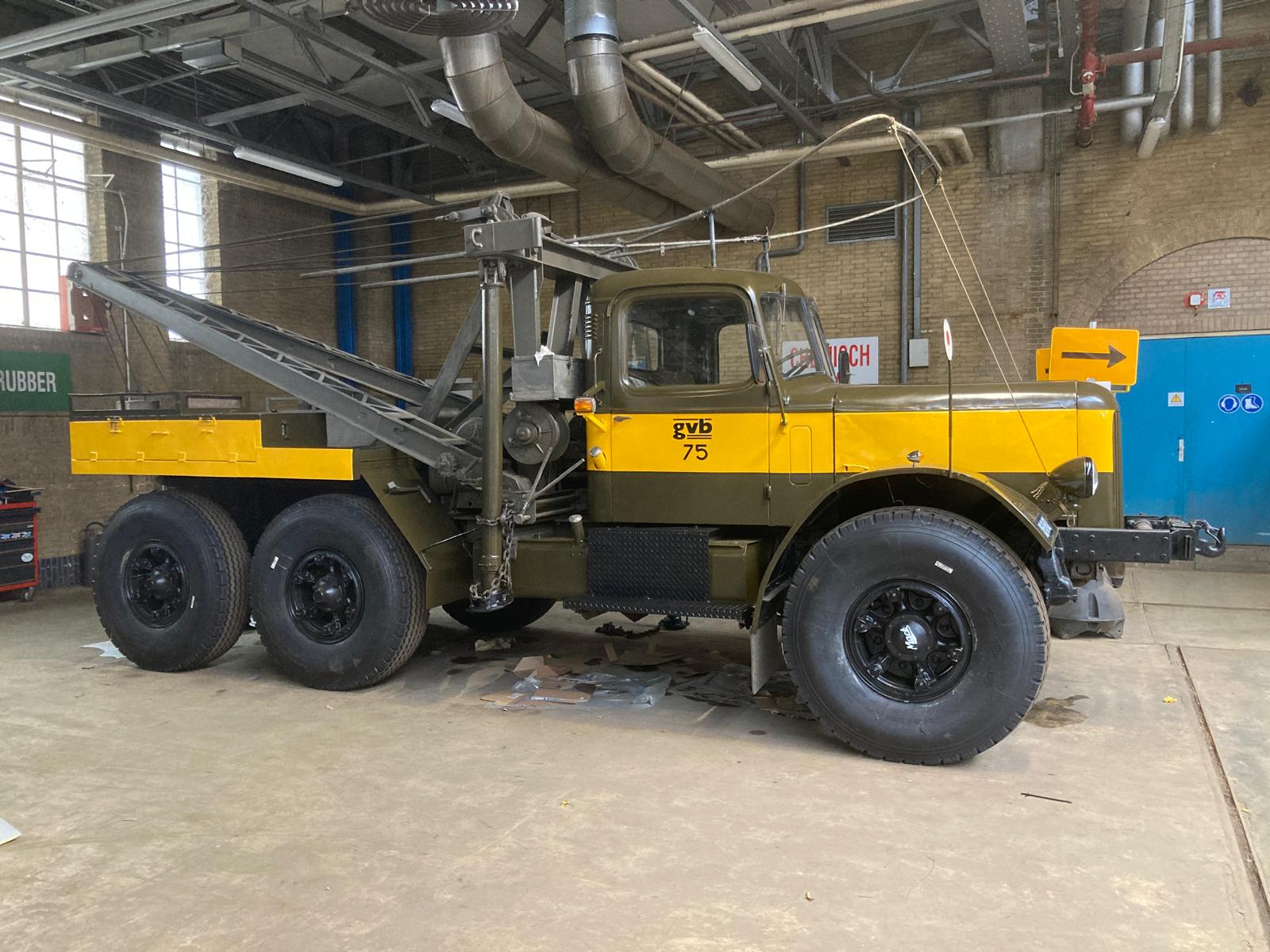
Mack-75
This Mack LMSW‑53 vehicle arrived in the Netherlands with the Canadian troops at the end of the Second World War. As far as is known, this type was built until 1943. Shortly after the war (the exact year is uncertain due to conflicting sources), two Mack LMSWs were purchased by the Municipality of Amsterdam. The vehicle was kept almost entirely in its original condition, including the 160‑hp petrol engine. Characteristic features included the heavy jack mounted on the front bumper and the towing coupling at the rear.
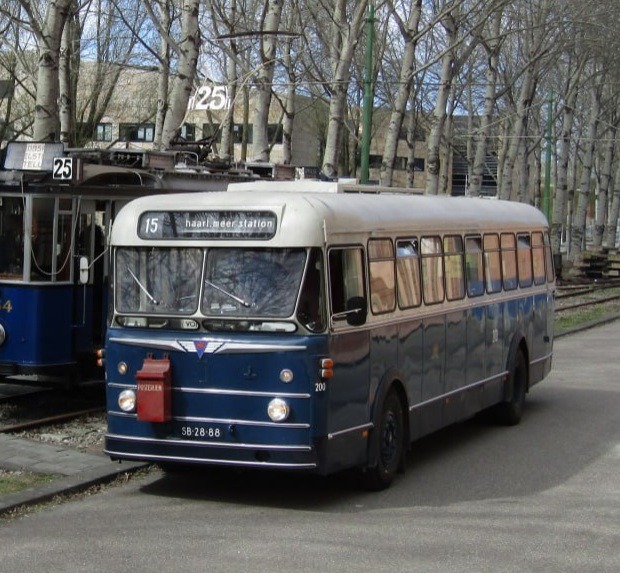
GVB 200
Bus 200 operated for the Amsterdam Municipal Transport Company (GVB) from 1957 to 1974 — a remarkably long service life for a city bus. The vehicles in the 200–224 series were known for their robustness and were deployed in nearly all parts of the city. In Amsterdam‑West they ran on routes F and L, and they also served routes 14, 15 (from 1965 the successor to E and F), 18 (successor to L), 20, 21 and 22. During peak hours they additionally operated on routes 45 and 47. In the final years of their service, they also appeared in Amsterdam‑Noord.
During the major overhaul programme from 1961 to 1965, bus 200 received the updated blue‑and‑white livery: a darker shade of blue and a lighter roof grey. The chrome grille was removed at the same time. In this appearance, bus 200 remained in service until the end of the 1973/74 winter timetable.
In late May 1974, Amsterdam bid farewell to this bus type, which had served countless Amsterdammers over the years. On 7 April 1975, bus 200 was officially designated a museum bus.
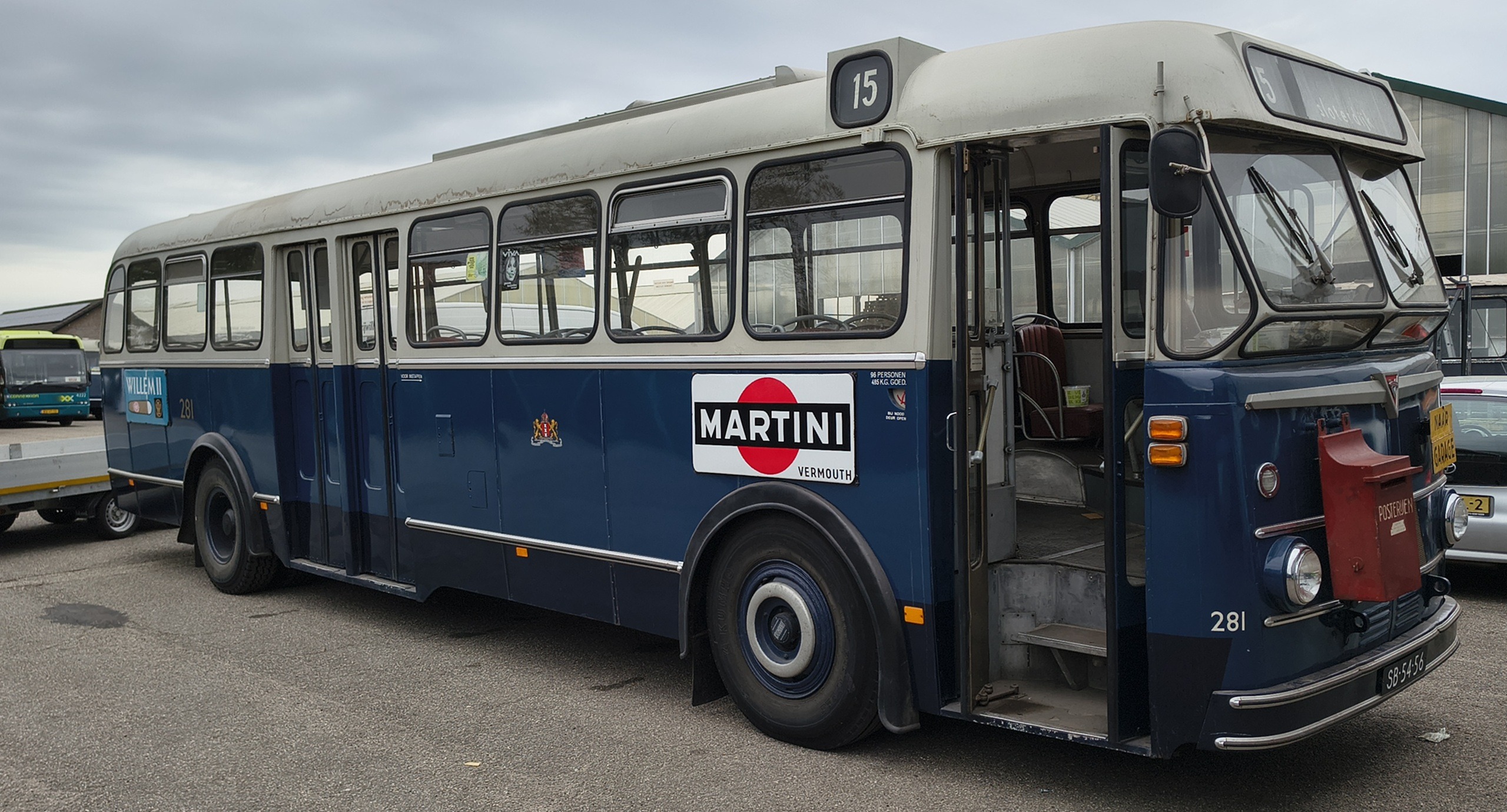
GVB 281
The 281 is part of the iconic blue GVB buses from the 1950s, recognizable by their clean Verheul bodywork and the dark‑blue lower section. It is also one of the few buses whose chassis, engine, and body were all built in the Netherlands — something that was exceptional at the time.
The 281 is part of the 250–294 series, delivered by Kromhout. This series was purchased to serve the major urban expansions in Slotervaart, Osdorp, and Geuzenveld.
Year of construction: 1957 Chassis & engine: Kromhout TBZ 100 with Kromhout 6 AT 117 diesel engine
The 281 has been transferred from Stichting BRAM to the EMA (Museum Tram Line Amsterdam).
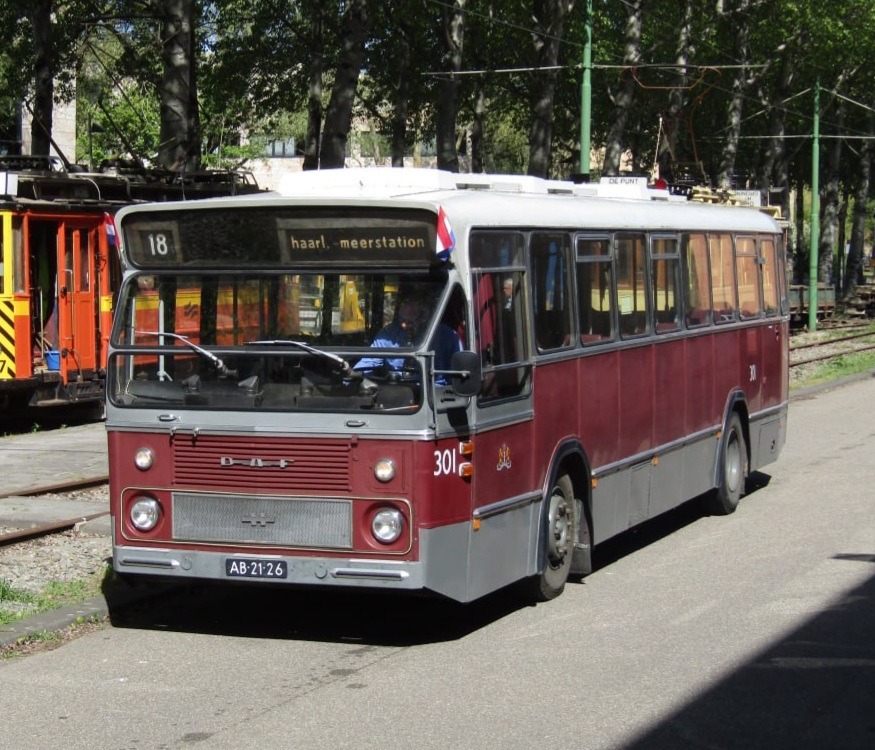
GVB 301
The 301 holds great historical significance as it is the very first standard city bus (standaardstadsbus) in the Netherlands. The vehicle was the result of a collaboration between the country’s four largest cities, which sought to reduce costs by developing a city bus suitable for all four transport companies. Amsterdam, Rotterdam, The Hague and Utrecht purchased the bus in large numbers, after which other cities followed. Groningen, Nijmegen and Maastricht were among those that also adopted the standard bus.**
For Dutch standards, an exceptionally large number of buses of this type were produced: more than 1,500 units. The first vehicles appeared in 1966, the last in 1983. Over the years, the bus underwent various improvements, but its basic design and appearance remained largely unchanged. As a result, the first‑generation standard city bus became a true Dutch success story — and a vehicle that can still be seen on the roads today.
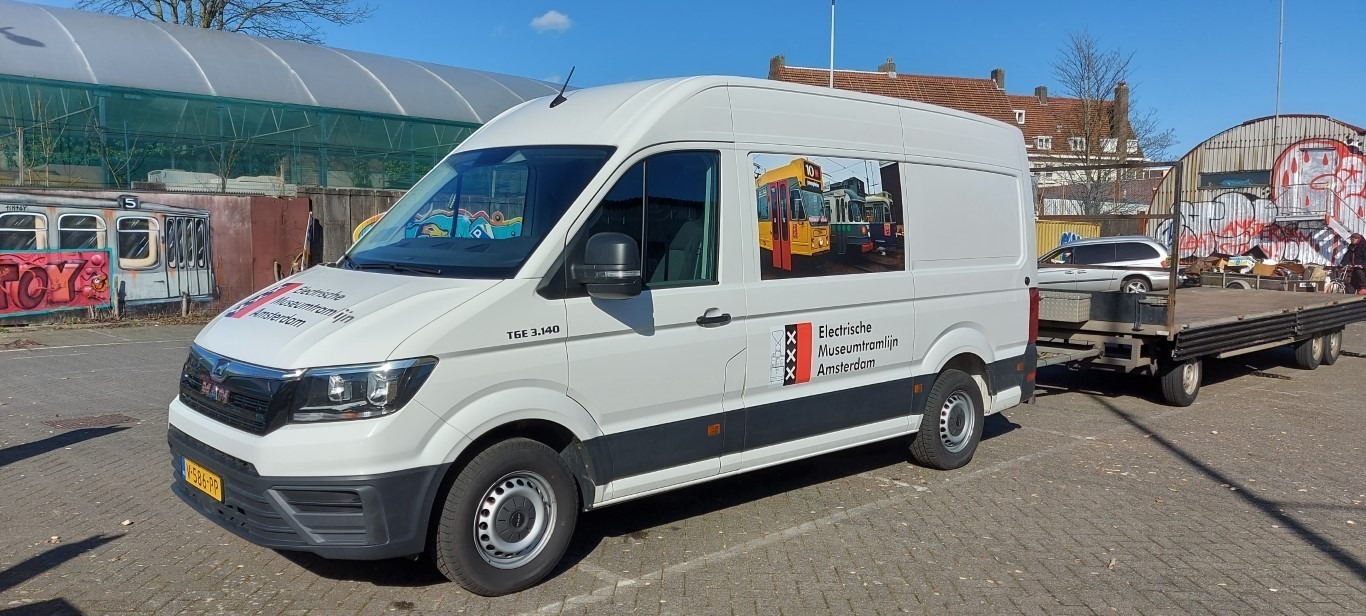
MAN van
In 2023, we began the major task of clearing our former depot and workshop behind Haarlemmermeerstation. A vast collection of materials had to be carefully redistributed to Aalsmeer, Remise Lekstraat, and the temporary depot at Jachthavenweg. Alongside the use of trucks and low‑loaders for tram transport, we acquired a second‑hand MAN bus, which we decorated with promotional imagery. This vehicle has since become a valued addition to our fleet, serving a wide variety of transport needs and strengthening our museum’s logistical capabilities.
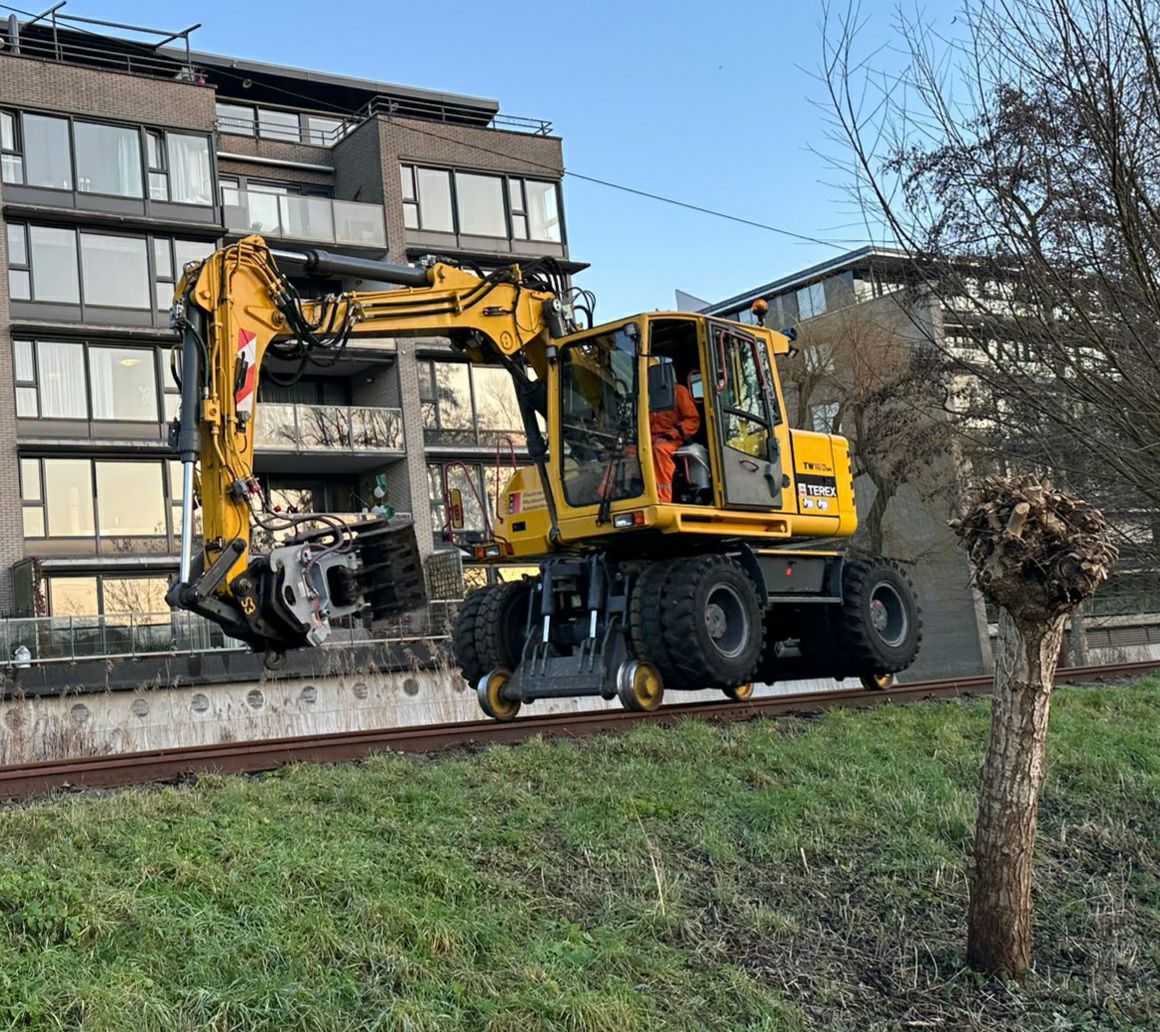
Crane on Rail Lorries (KROL)
At the beginning of 2026, we acquired an excavator capable of moving along the rails. Such equipment is invaluable for railway and tramway maintenance, as it combines lifting capacity with the ability to travel directly over the rails to the work site. This purchase offers the important advantage of independence from external contractors, enabling us to carry out track maintenance flexibly and on our own schedule.
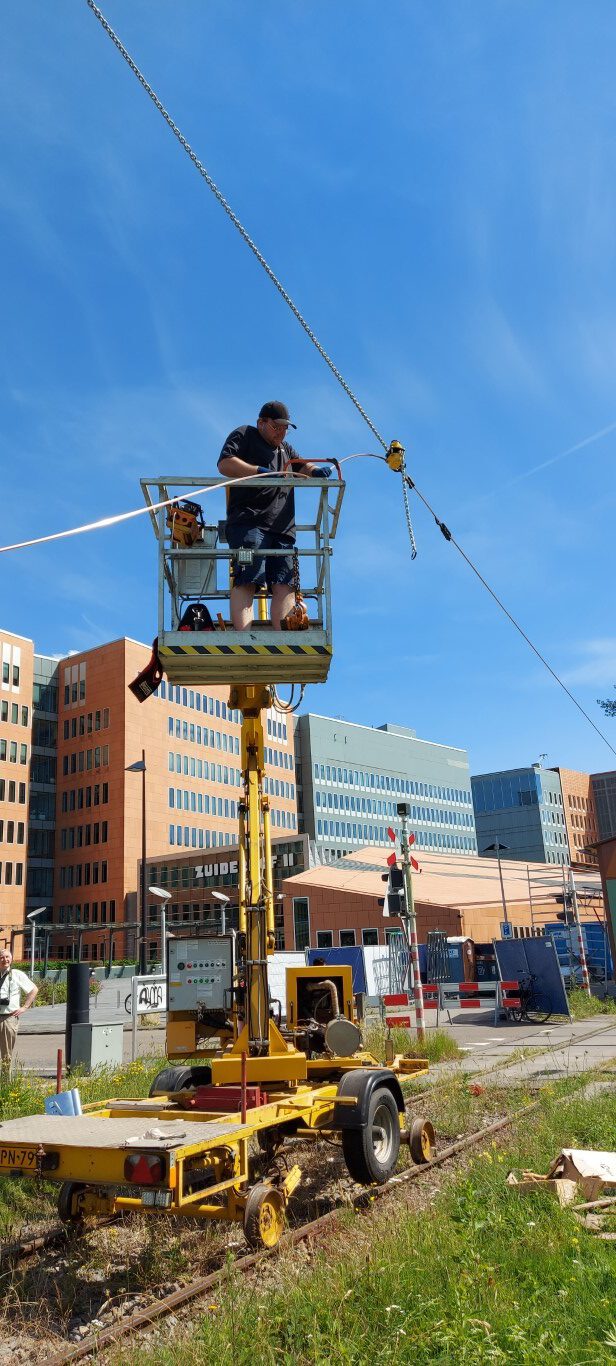
Cherry-picker ~ Aerial work platform
This devices enables us to work on the catenary (overhead wires) and to manage high vegetation such as overhanging tree branches.