Amsterdam trams
Browse restored Amsterdam motor cars, trailer cars, articulated trams, works cars and metro heritage from the Museum Tramway collection.
From early tramcars to metro heritage
This collection shows the development of Amsterdam public transport, from early electric tramcars to the Zilvermeeuw metro train.
5 sections, 33 items
Choose a section directly or browse the full list.
Collection
Amsterdam Motorcars
1
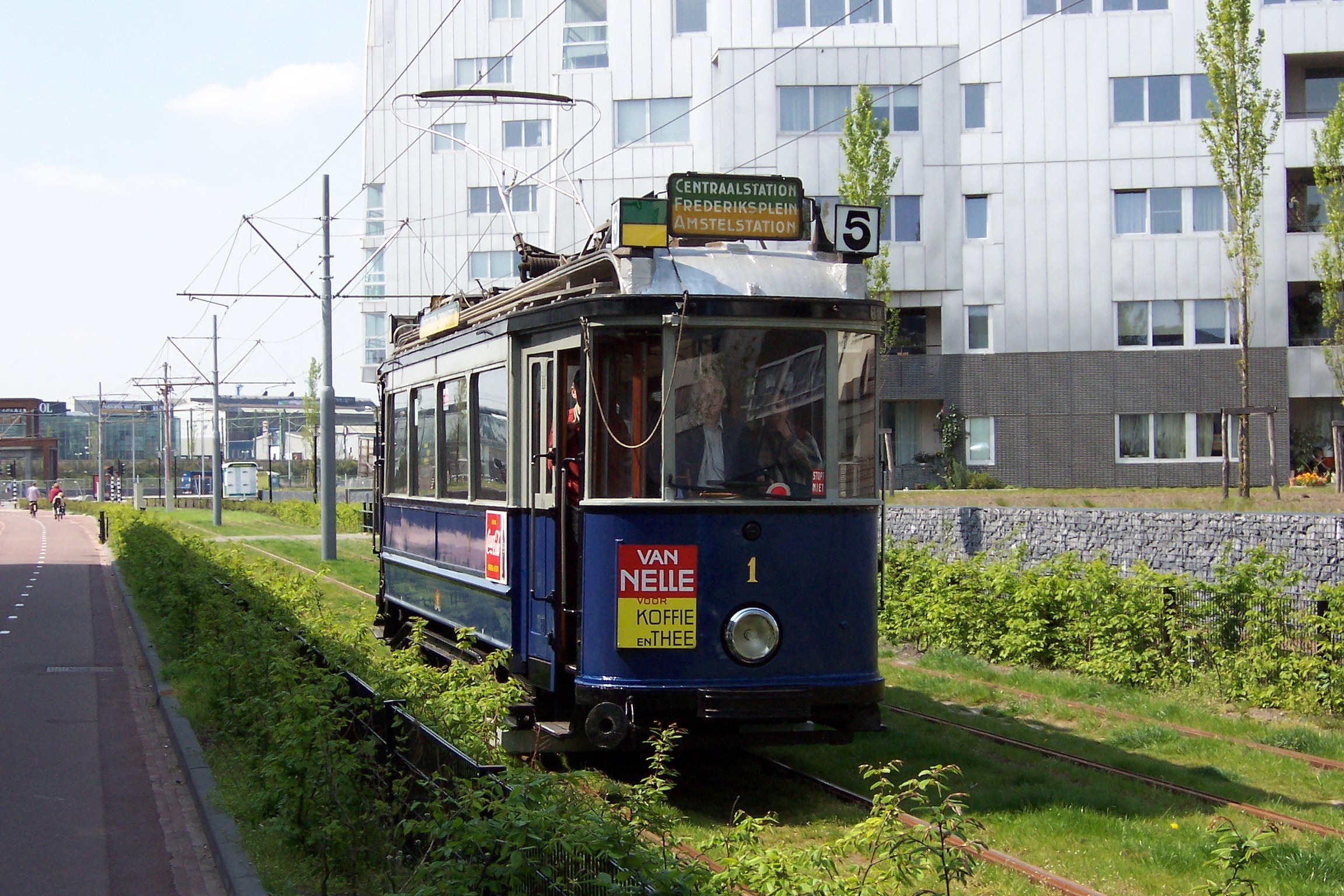
These vehicles, built in 1927 by Werkspoor (Zuilen), first operated in Utrecht (GTU). In 1939, shortly before the war, 12 of these cars were transferred to Amsterdam as the 1–12 series. In the 1950s they were renumbered to 301–312 to avoid duplicates and confusion with existing numbers. Time permitting, we'll restore this former no. 301 back to its original condition as no. 1.
72
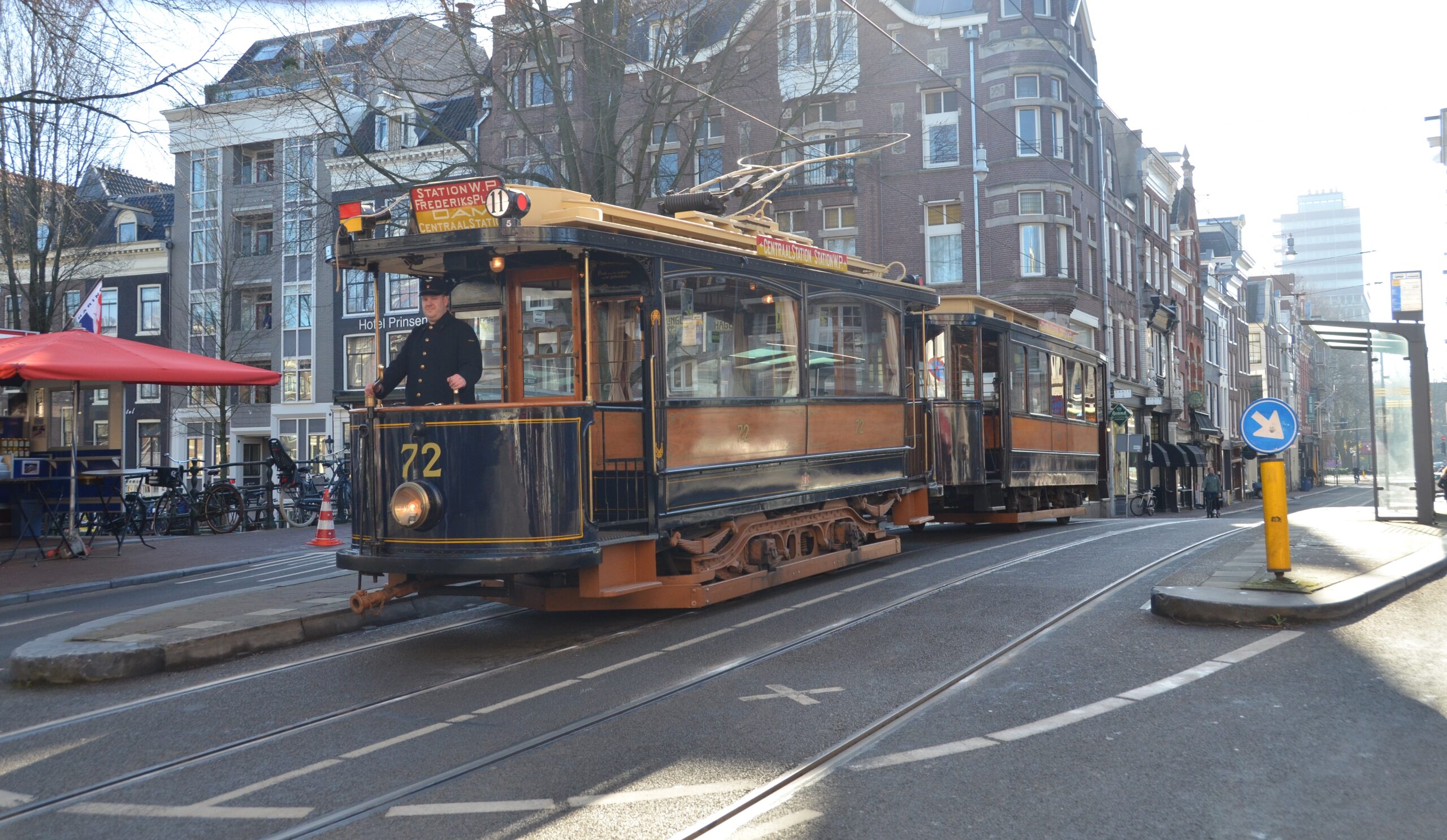
The Amsterdam motor car 72 is one of only three preserved Amsterdam two‑axle cars out of a total of 215. They were built between 1902 and 1905 by three manufacturers (Raba Györ in Hungary, Werkspoor Amsterdam, and Van der Zypen in Cologne, Germany). All of these cars were equipped with electrical systems from the Union Elektrizitäts‑Gesellschaft. The name “Union” was displayed in elegant lettering on the controller housings, and it quickly became the nickname by which Amsterdam crews referred to these trams.
144
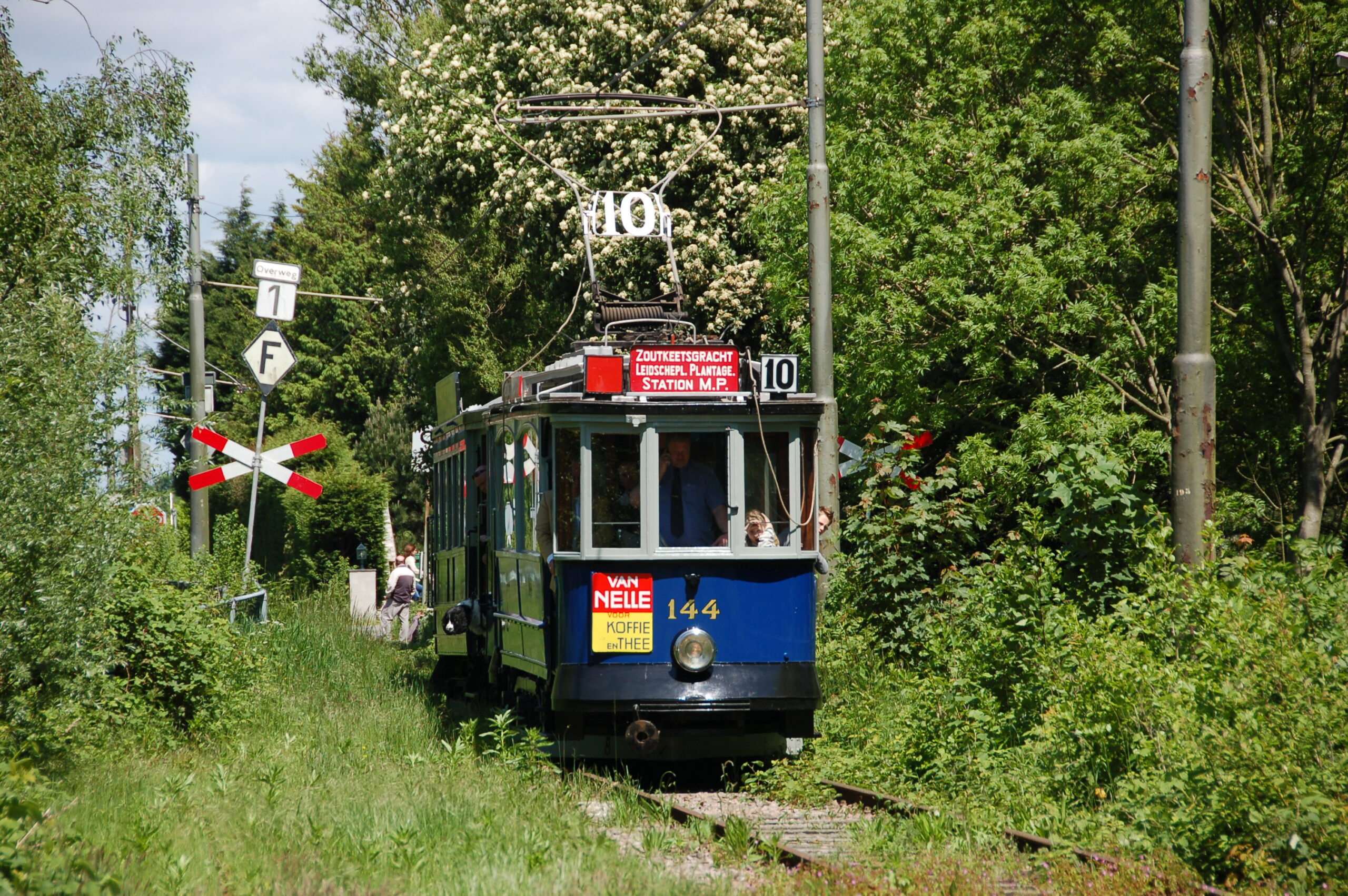
This motor car entered service in 1904 and was built by the Ungarische Waggon- und Maschinenfabrik A.G. in Győr (Raab), Hungary, as part of the 15–229 series. They remained in operation until the closure of the shuttle line to Sloterdijk on New Year’s Eve 1950.
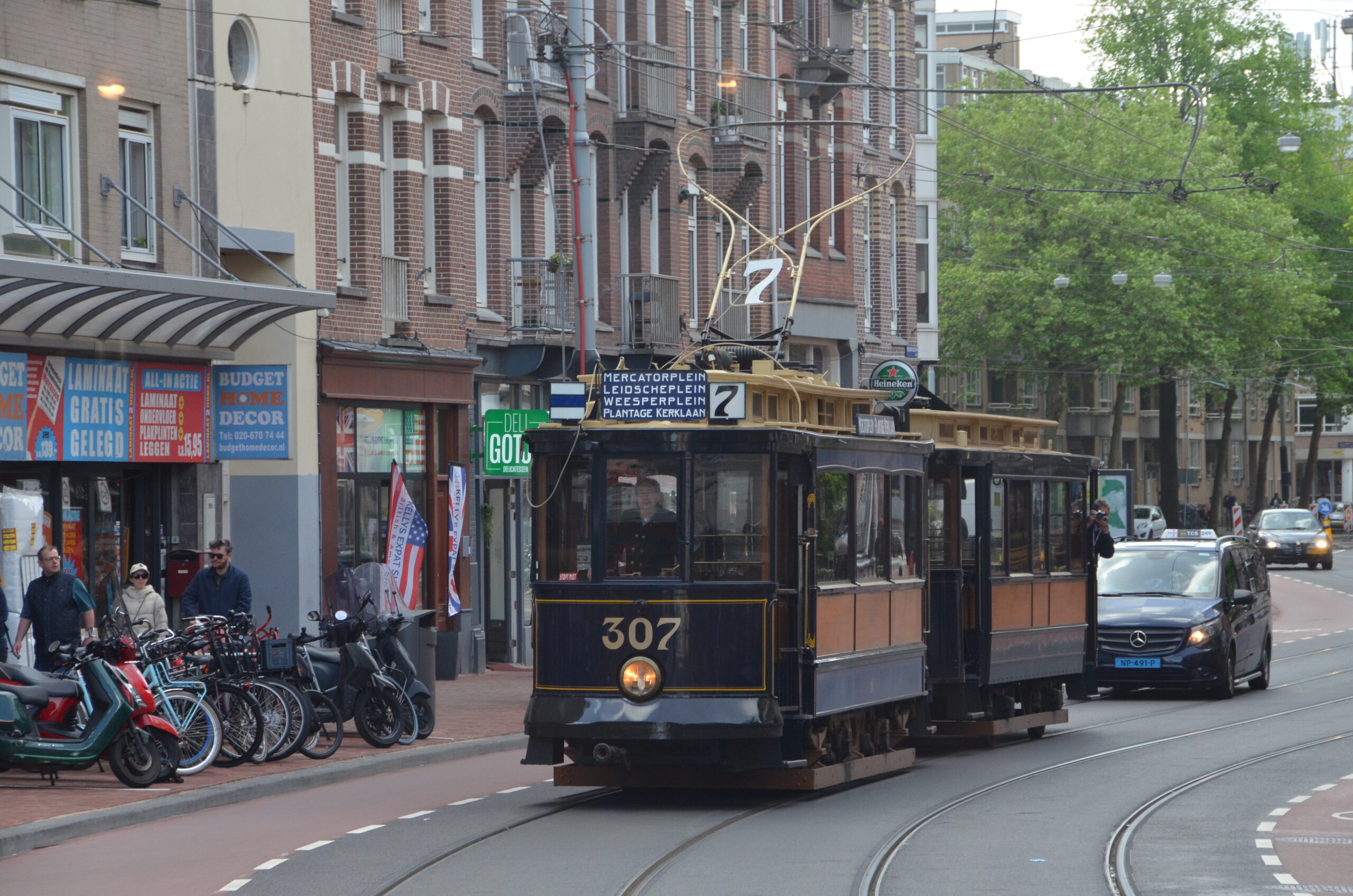
307
After the purchase of 229 electric motor cars between 1900 and 1905, the former horse‑tram cars were used as trailers. Over time, there was also a need for trailers built specifically for electric operation. The first newly built series of twenty trailers was delivered in 1910 by Werkspoor, numbered 401–420. Unlike what was common at the time, these trams had transverse seats that could be folded over. The three side windows could also be lowered far down, allowing them to serve as semi‑open cars in summer. For this reason, they were called “season cars”.
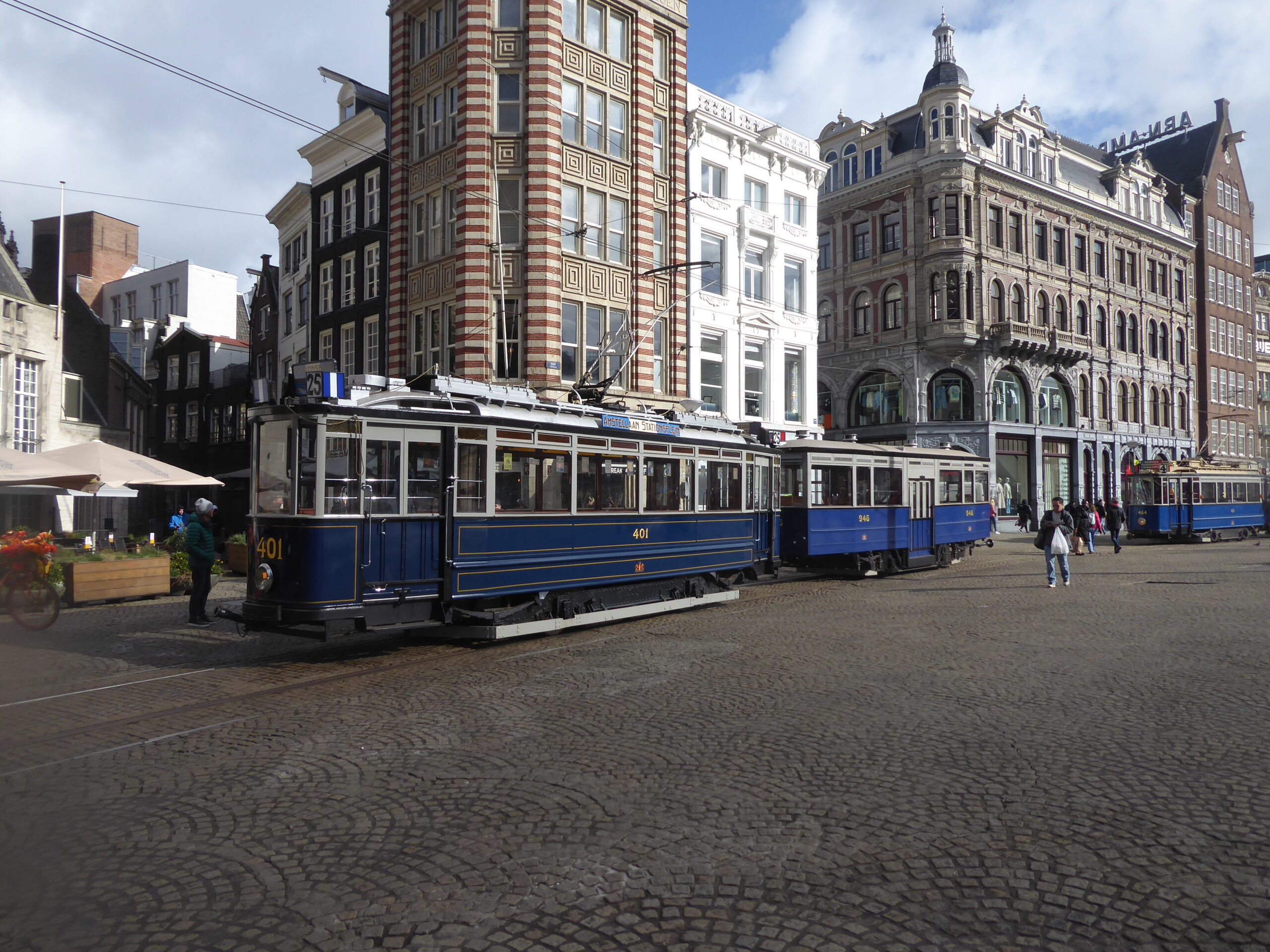
401
Since the start of the Museum Tram Line in 1975, motor car 401 has been a familiar sight. In 1967 it made its final run in Amsterdam’s regular service, and even before that last trip was completed, the tram had already been added to the collection.
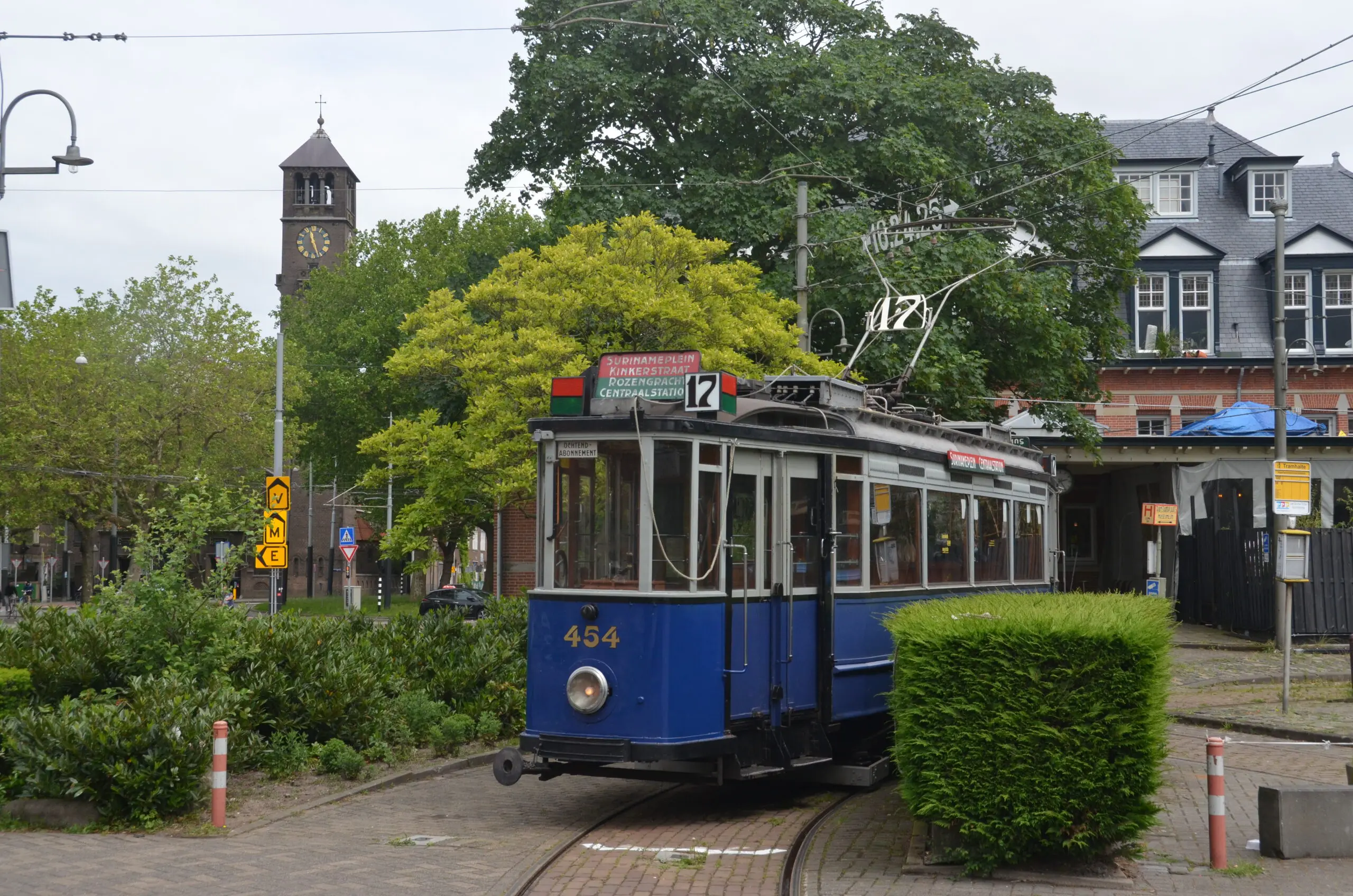
454
Due to Amsterdam’s expansion, the Municipal Tramways purchased a total of 50 motor cars and 30 matching large‑type trailers in 1929. A notable feature was the use of longitudinal benches, which were soon sawn into transverse benches with two‑seaters on one side. The seats faced each other, except for those adjacent to the end bulkheads, which remained transverse benches. The trailers almost always ran behind the matching blue motor cars 396–445, though they were also occasionally coupled to the Grootbordes motor cars.
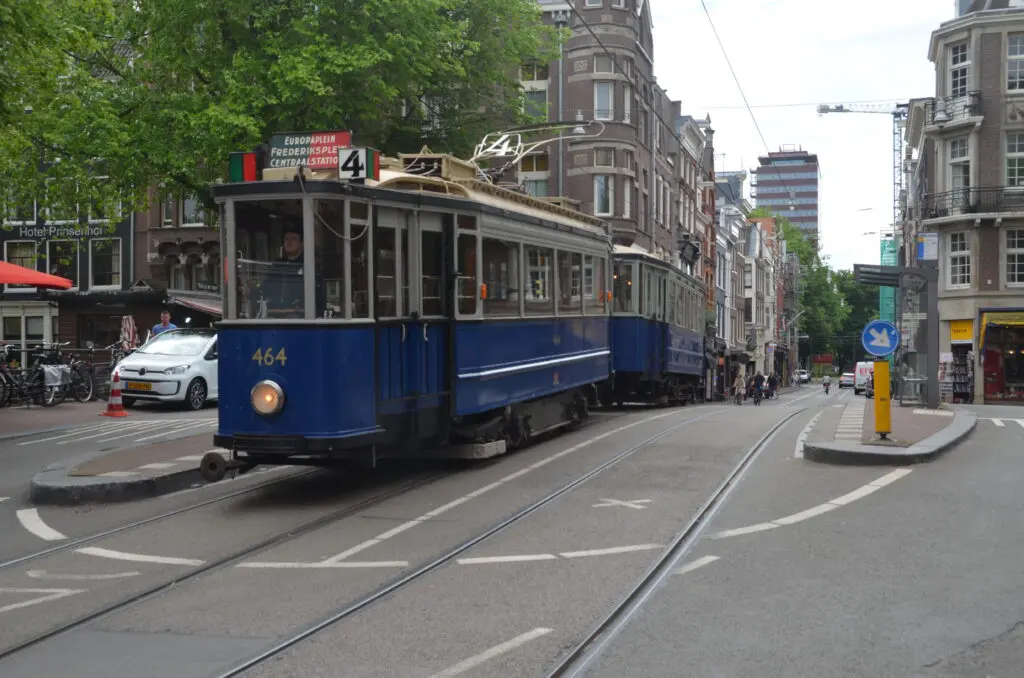
464
Due to Amsterdam’s expansion, the Municipal Tramways purchased 50 motor cars and 30 matching large‑type trailers in 1929. A notable feature was the use of longitudinal benches, which were soon converted into transverse benches with two‑seaters on one side. The seats faced each other, except for those next to the end bulkheads, which remained transverse benches. The trailers almost always ran behind the matching blue motor cars 396–445, though they were also coupled to the Grootbordes motor cars.
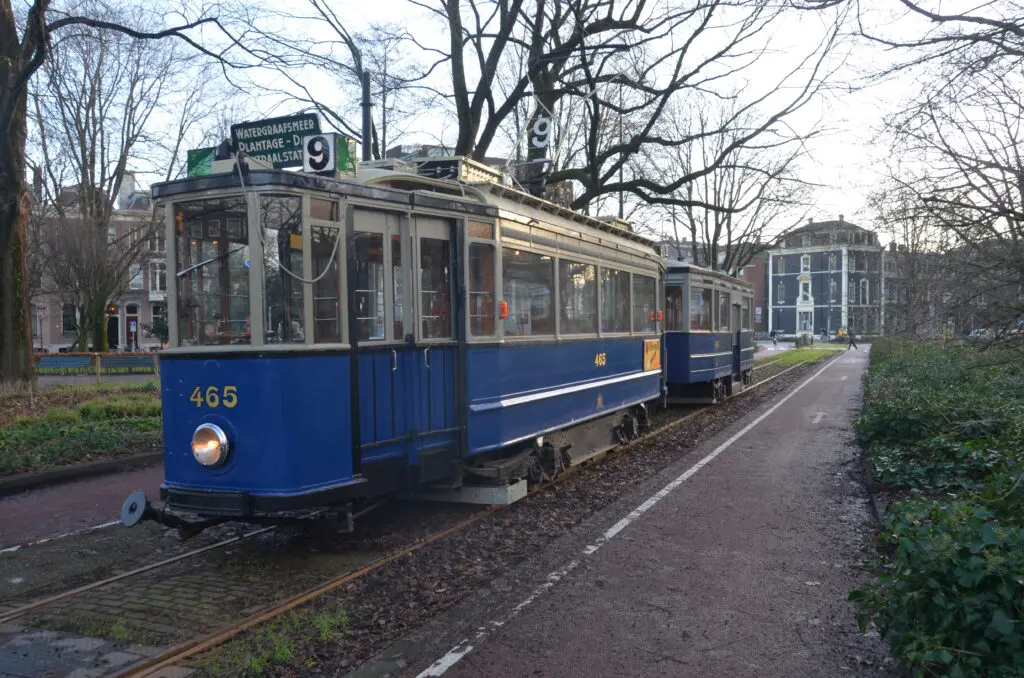
465
In 2002, the restored car 465 returned to service on the Museum Tram Line. Until 1997, this single‑ended tram could not be used in passenger service on the line to Amstelveen because there was no turning facility. It was therefore converted into a “Book Tram,” the predecessor of today’s Museum Shop, and placed at the terminus. It is the same tram that performed the inaugural run on 20 September 1975.
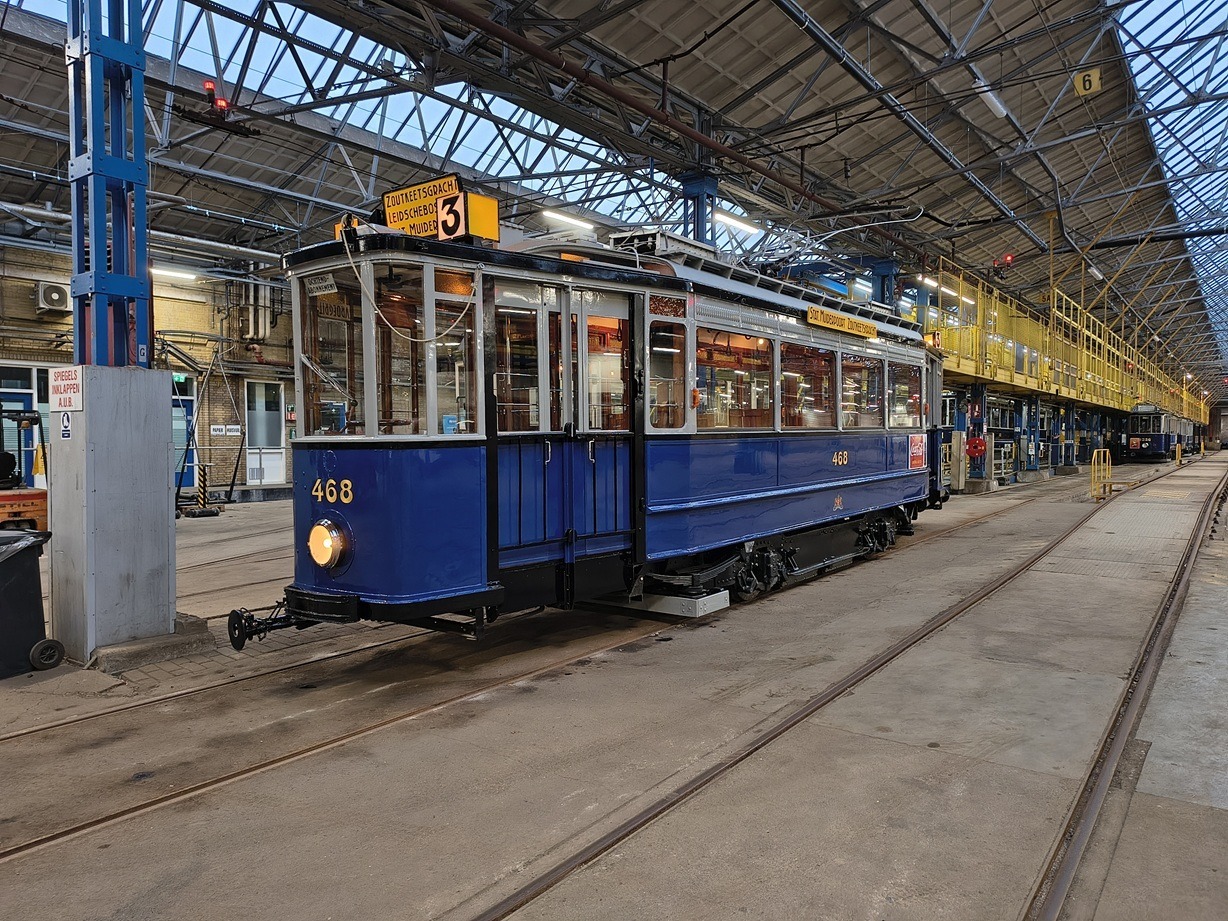
468
The 468 comes from the 446–475 series, built in 1929 by the Beijnes company in Haarlem. It was nicknamed the “Blue Car” because of the characteristic blue GVB livery of that era. Between 2021 and 2026 the car underwent a major overhaul. It is mainly used for city trips.
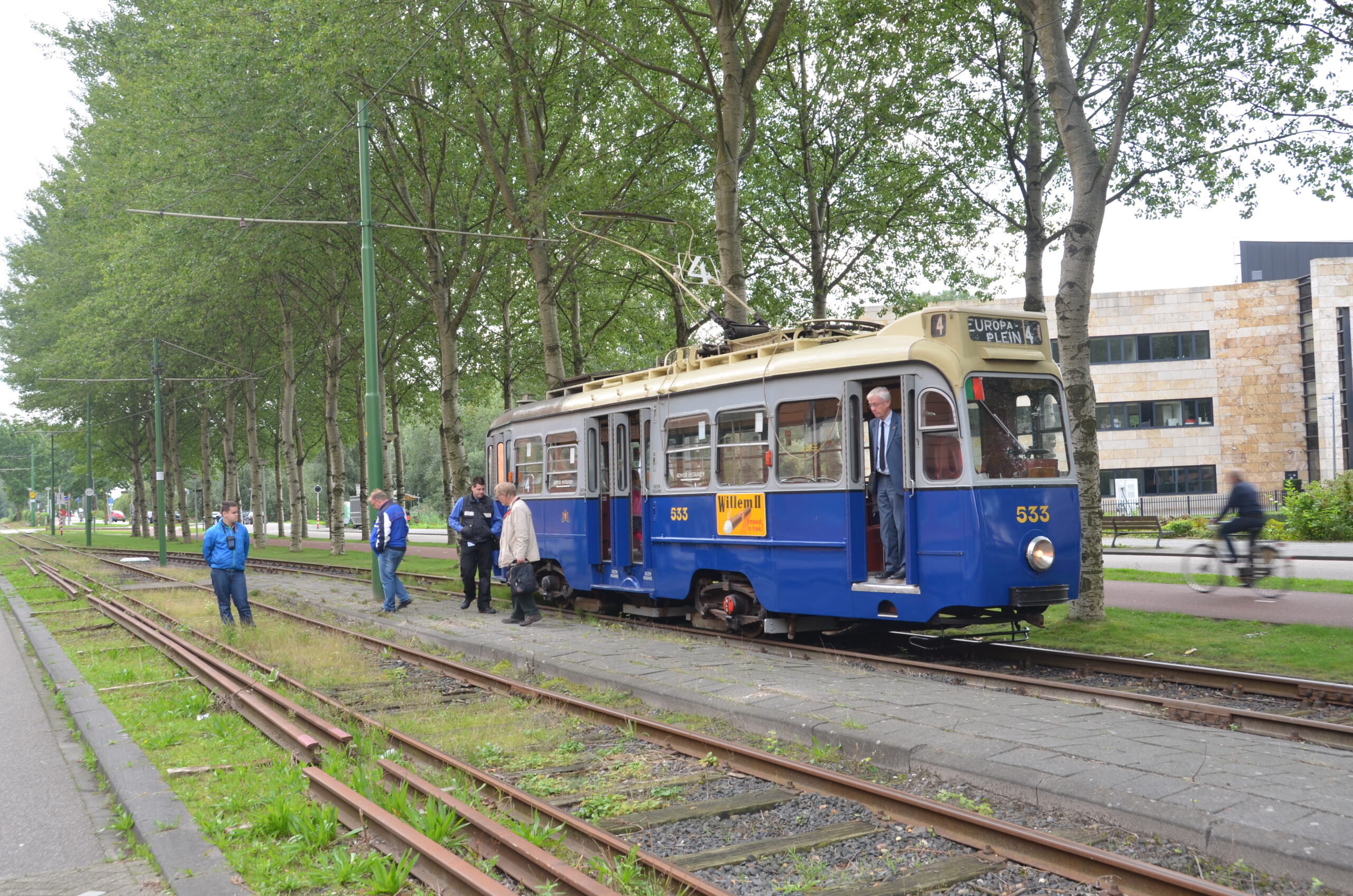
533
Already in the 1930s, plans were made to modernise the tram fleet. Four‑axle cars, which had been purchased in large numbers in Rotterdam, were considered too expensive for Amsterdam. A compromise was therefore chosen: the three‑axle tram. Delayed by the Second World War, sixty new motor cars and fifty matching trailers were acquired between 1948 and 1950.
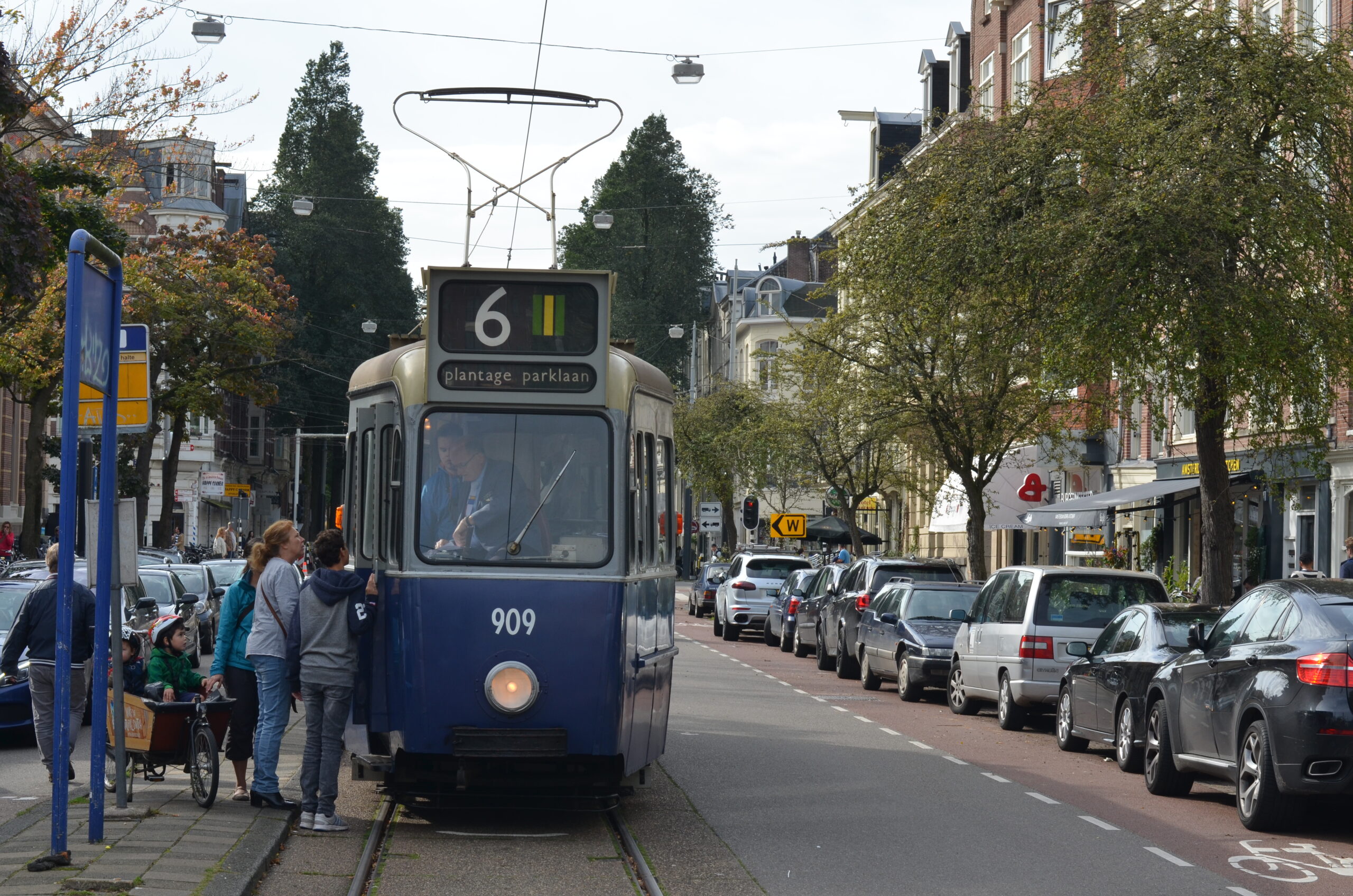
909
Already in the 1930s, plans were made to modernise the tram fleet. Four‑axle cars, like those purchased in large numbers in Rotterdam, were considered too expensive for Amsterdam. A compromise was therefore chosen: the three‑axle tram. Delayed by the Second World War, sixty new motor cars and fifty matching trailers were acquired between 1948 and 1950. In 1968, motor cars 491–550 were renumbered to 891–950 because buses were being delivered with the same fleet numbers. In that same year, twelve motor cars were rebuilt with a larger destination box and new doors.
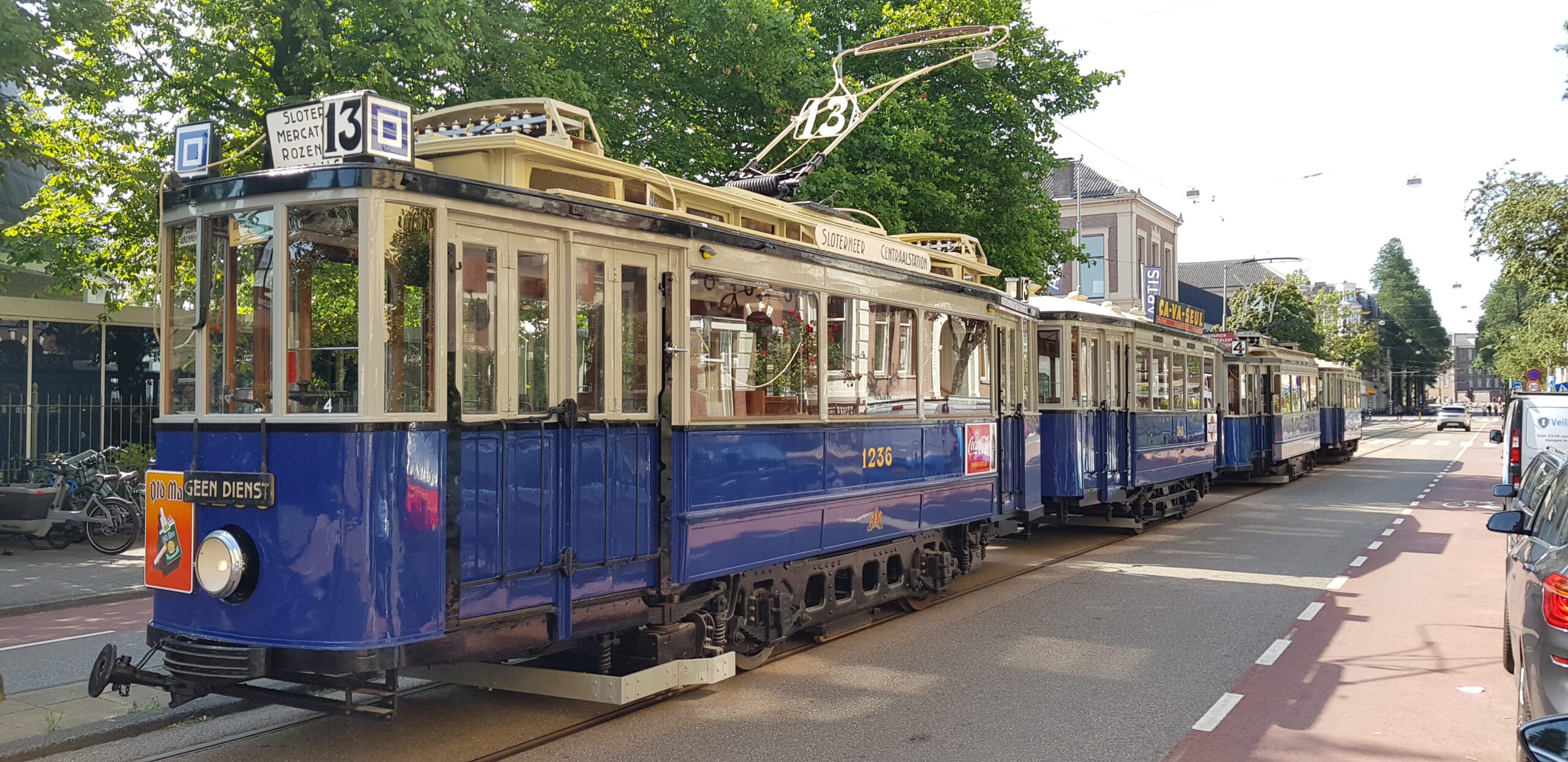
1236 (ex. 236)
In 1913, Werkspoor delivered nearly 135 motor cars, easily recognisable by their three side windows, which set them apart from the earlier Union cars. They were called “Grootbordessers” because of their large end platforms. Thanks to these spacious platforms with double doors, two passengers could board and alight at the same time; the steps leading to the platforms were marked with large white letters reading IN and UIT.
Amsterdams trailercars
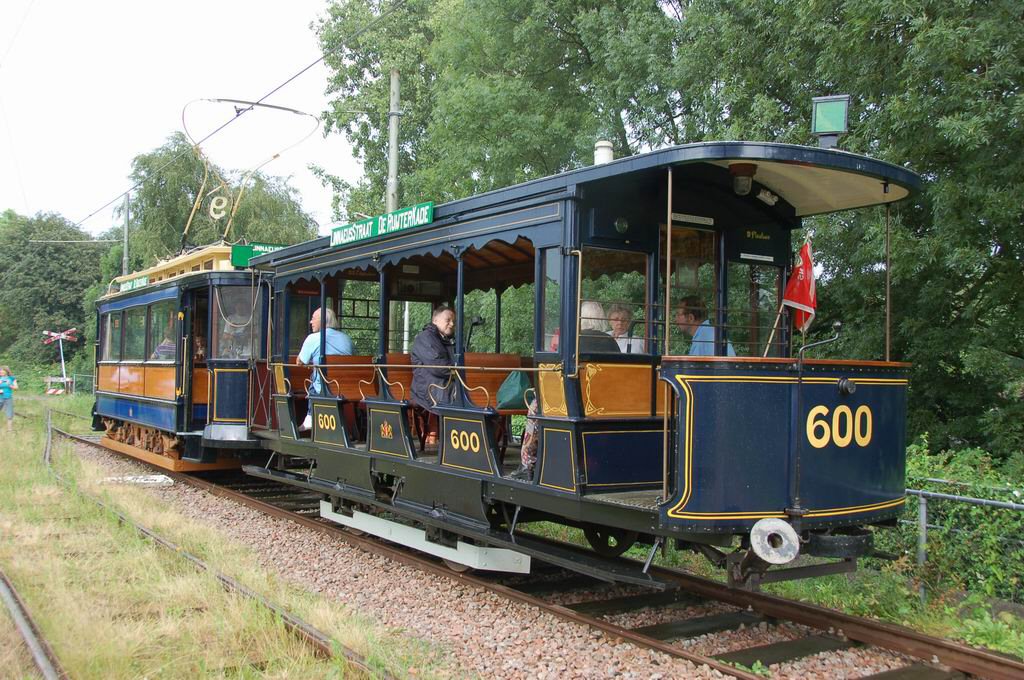
600
This carriage is a replica, built in 2000 by staff of the Stichting Rijdend Elektrisch Tram Museum. In 1893, the Amsterdamsche Omnibus Maatschappij introduced a large number of open horse‑tram cars. After the company was transformed into the Municipal Tram of Amsterdam, the new municipal operator inherited this substantial fleet of horse‑tram vehicles. Nearly 200 of these cars were adapted for use as trailers behind the electric motor cars. This included trailer 211, which was renumbered to 600 in 1914 and became part of the sub‑series 597–600 (ex‑AOM 208–211). The complete series of open trailers of this type comprised numbers 566–600. These cars could accommodate 22 seated and 18 standing passengers.
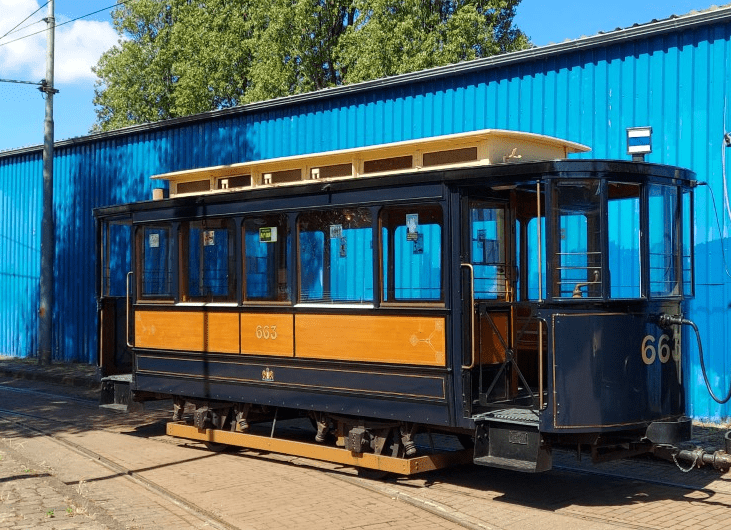
663
GVB 663 is one of the oldest preserved Amsterdam trailer cars.
It began its life in 1913, operated in Amsterdam until 1940, then had a second career with the NZH, later moving through various museums and storage locations, and has been under restoration since 2005 to return it to its 1916 historical appearance.
It is a remarkable example of early‑20th‑century Amsterdam tram history and one of the few surviving trailers from this series.
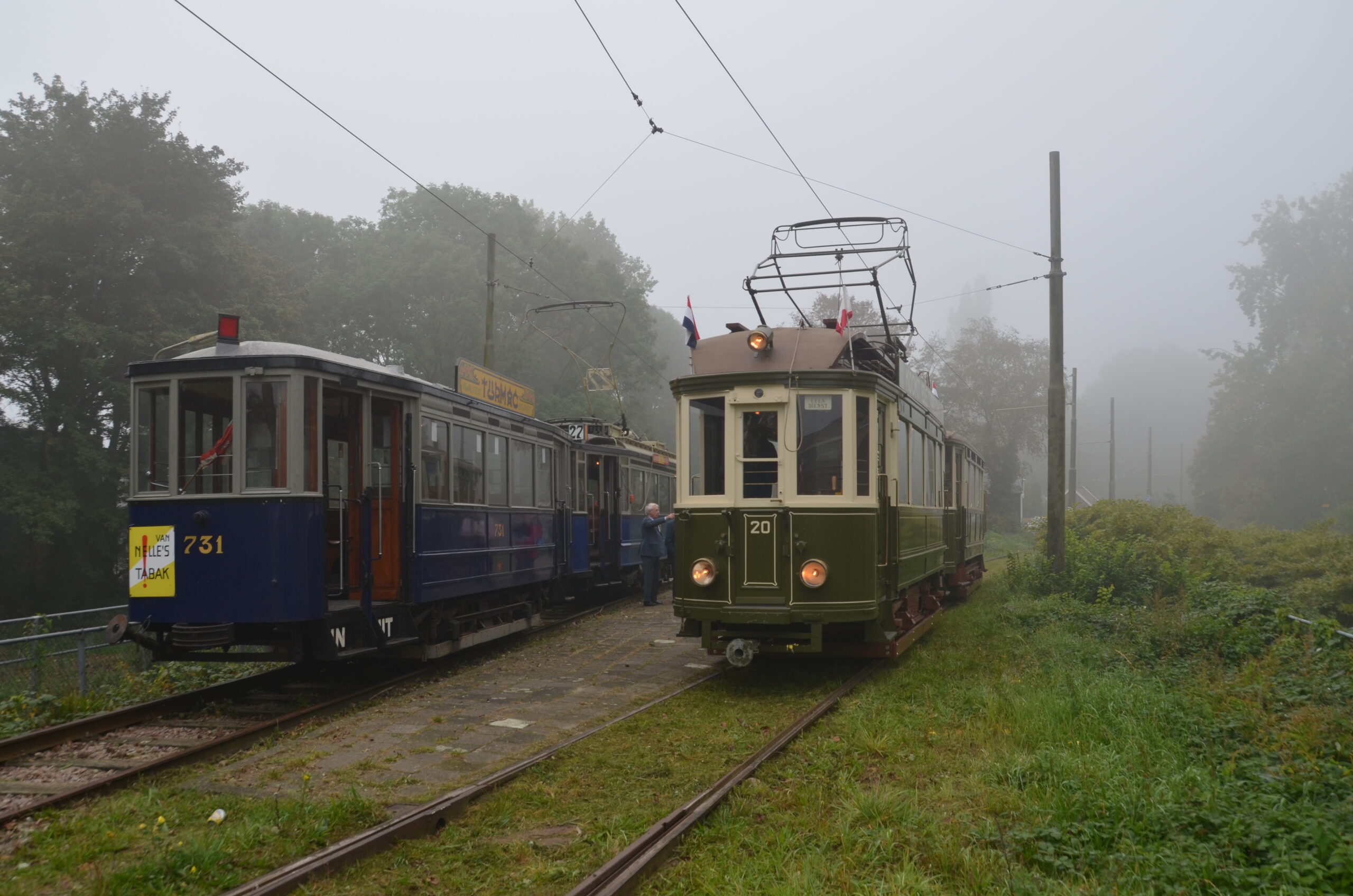
731
In 1918, Werkspoor delivered 135 motor cars, easily recognisable by their side windows, which clearly distinguished them from the earlier Union cars. They were called “Grootbordessers” because of their large end platforms. Thanks to these spacious platforms with double doors, two passengers could board and alight at the same time; the steps leading up to the platforms were marked with large white letters reading IN and UIT. In 1918/19, a series of 180 matching trailers was delivered, including this passenger car no. 731.
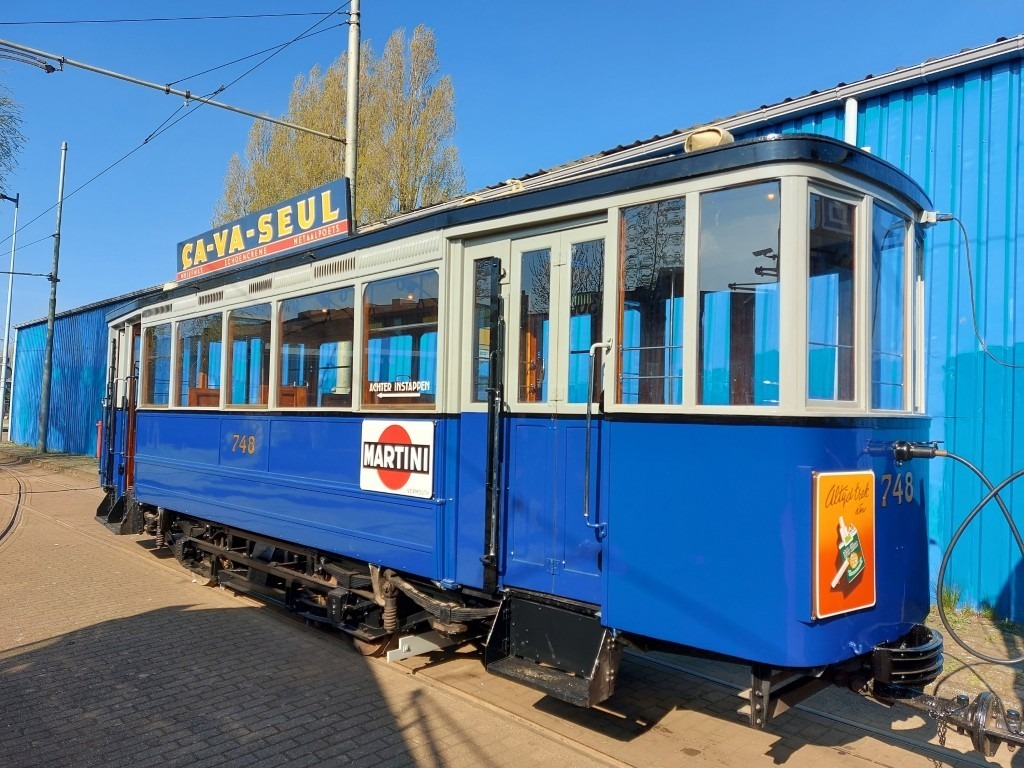
748
Trailer car 748 is part of the series of 140 trailers numbered 701–840, built by Werkspoor between 1914 and 1918. In 1921, another forty trailers were added, numbered 841–880, built by HAWA in Hannover. These 180 trailers formed the largest series of Amsterdam trailer cars and operated behind (almost) all types of two‑axle motor cars used in the city. For more than half a century, they were a defining presence on Amsterdam’s tram routes.
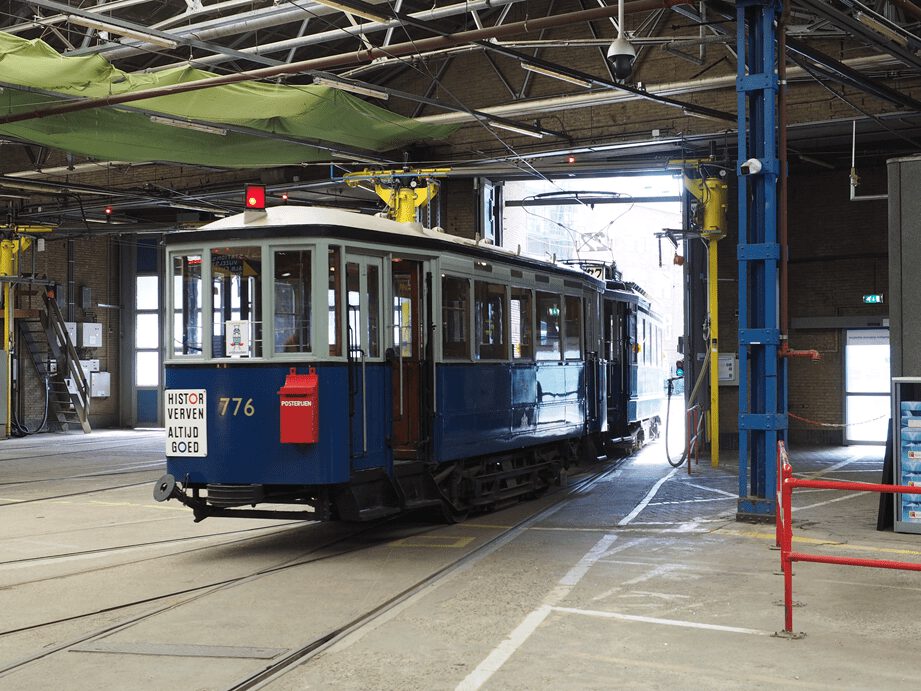
776 (BW)
Because of the running behaviour and noise of the Type trailers, Werkspoor was commissioned by the Municipal Tramways to re‑develop a trailer type using an improved truck. Equipped with double suspension and an extremely light underframe, the running characteristics were significantly improved. By giving the roof a domed shape, the entire car body became lighter in weight (which earned them the nickname “submarine”). The platforms had the same layout as the Grootbordes motor cars of 1913, hence the name Grootbordes trailers. The platforms allowed separate boarding and alighting. Between 1914 and 1918, 140 trailers of this type were built. In 1921, a follow‑up order of 40 identical trailers was placed, this time built by the German manufacturer HaWa.
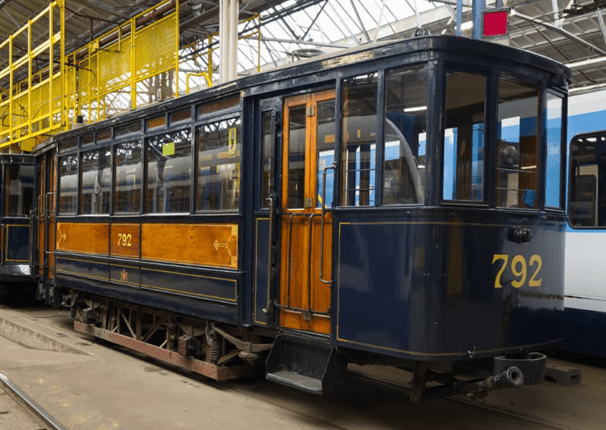
792
In 1918, Werkspoor delivered 135 motor cars, easily recognisable by their three side windows, which clearly distinguished them from the earlier Union cars. They were known as “Grootbordessers” because of their large end platforms. Thanks to these spacious platforms with double doors, two passengers could board and alight at the same time; the steps leading up to the platforms were marked with large white letters reading IN and UIT. In 1918/19, a series of 180 matching trailers was delivered, including this passenger car no. 792.
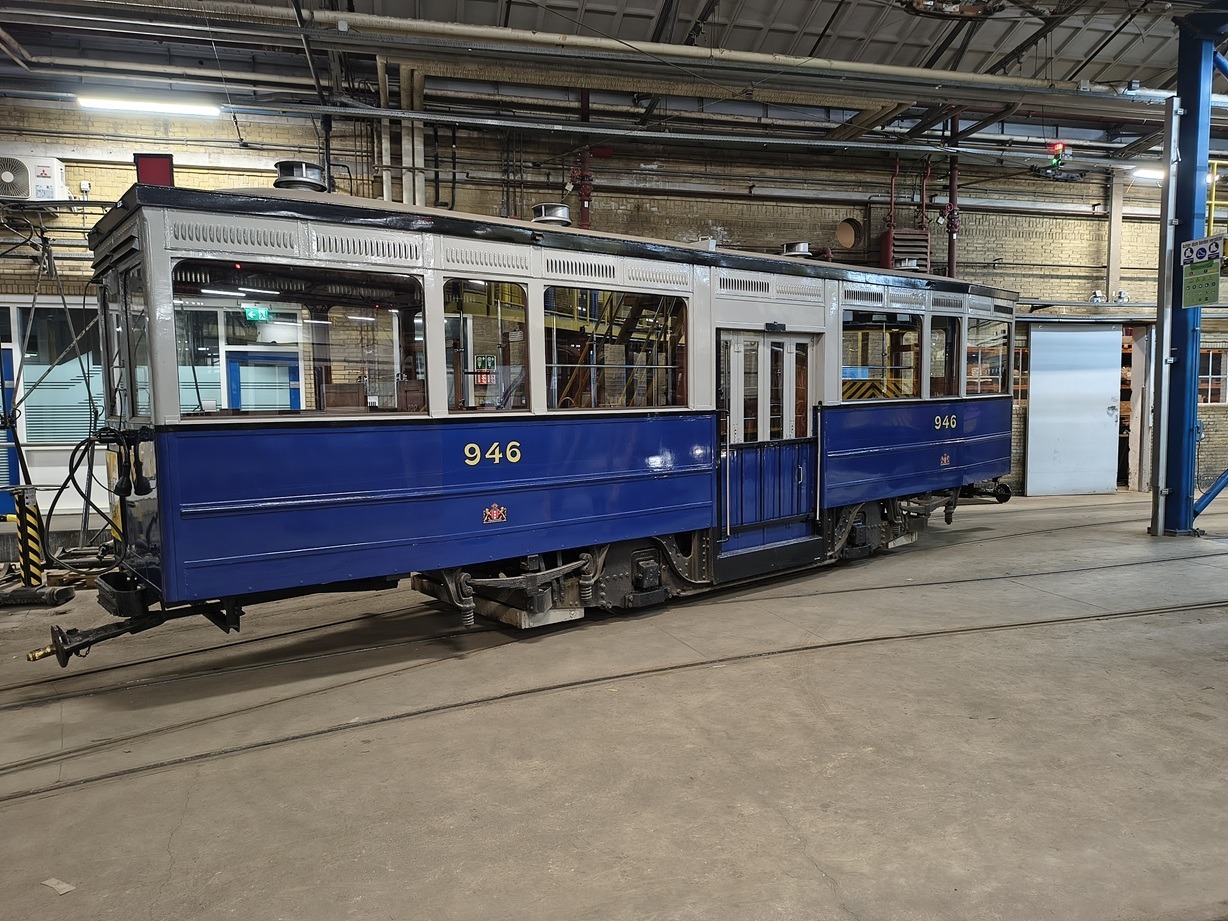
946
Trailer car 946 is a middle‑entry trailer from the 931–950 series, built in 1930 by the Rotterdam firm Allan. This series was an extended version of the earlier middle‑entry cars (881–900) and was designed for rapid passenger flow thanks to the low central platform. Conductors were less fond of these cars, known as the “birdcage,” because they constantly had to go up and down the steps between the raised compartments.
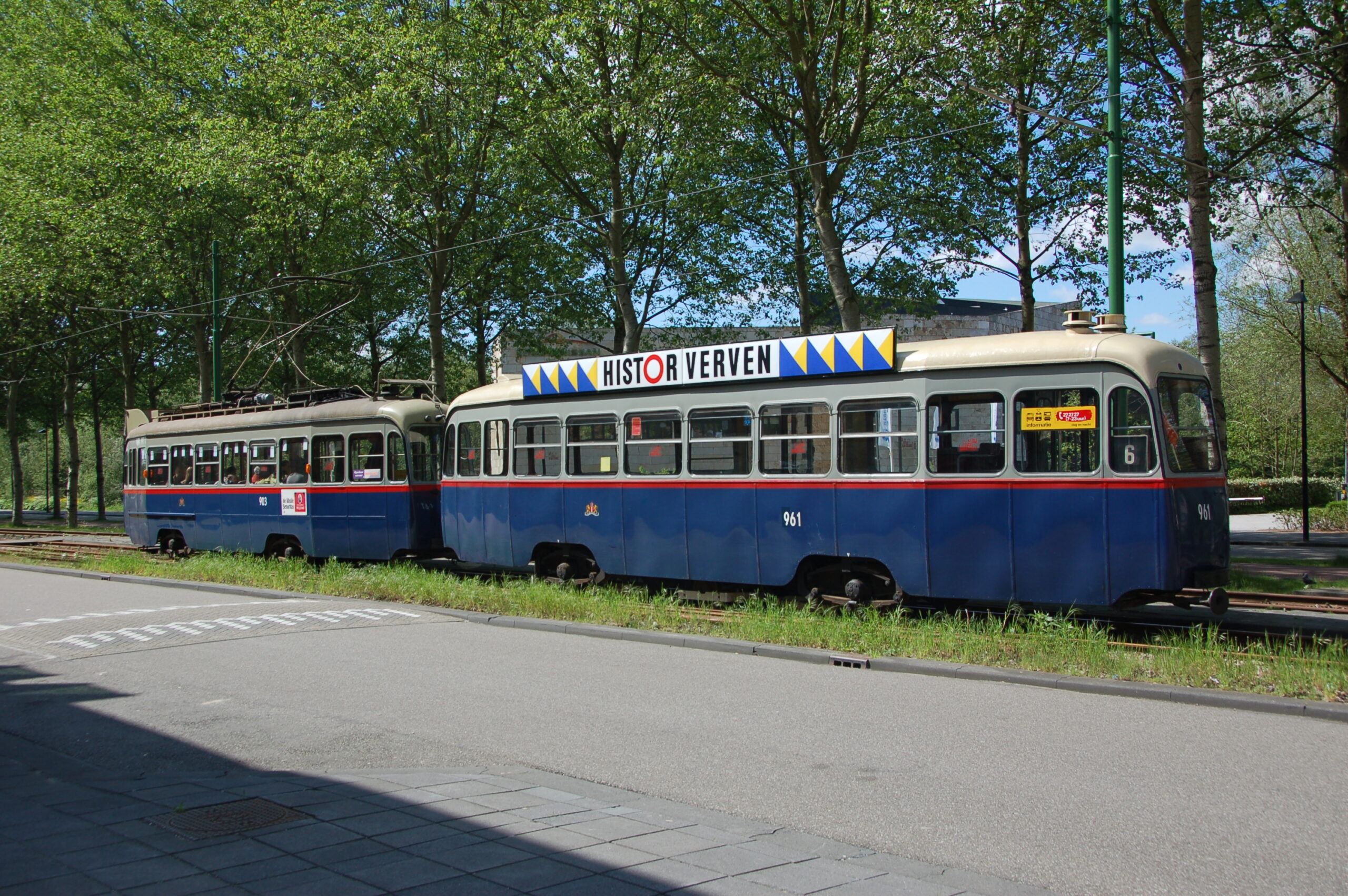
961
This three‑axle trailer, built in 1949 and refurbished in 2012, serves—whenever possible or required—as the regular trailer for three‑axle motor car 903. Like the motor car, it was upgraded in 1968 and fitted with improved doors and larger destination boxes.

987
Already in the 1930s, plans were made to modernise the tram fleet. Four‑axle cars, like those purchased in large numbers in Rotterdam, were considered too expensive for Amsterdam. A compromise was therefore chosen: the three‑axle tram. Delayed by the Second World War, sixty new motor cars and fifty matching trailers were acquired between 1948 and 1950, of which this three‑axle trailer no. 987 is one. This trailer was withdrawn from service in 1975, having never undergone any rebuilds.
Amsterdams articulated
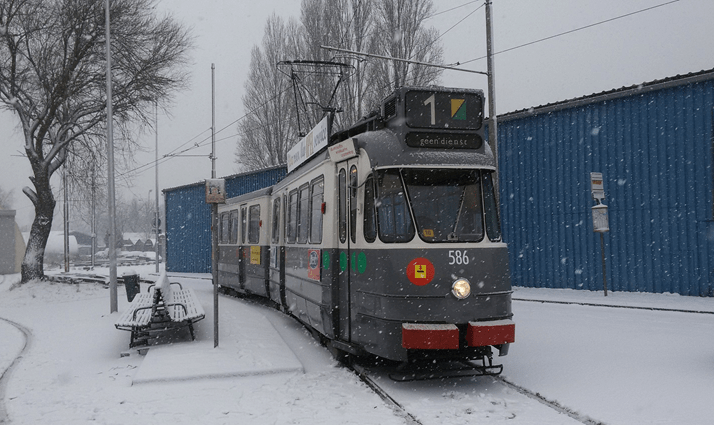
586
As articulated trams were already being developed in Germany, the management of the Amsterdam Municipal Transport Company decided to place a trial order for 25 articulated trams. These trams received the type designation “1G” (First Series Articulated) and were numbered 551–575. They were delivered in 1957. With their modern design in the characteristic light‑grey and white colour scheme, fitted with a pantograph and a large destination box that also displayed the route colour, they were striking newcomers on the Amsterdam tram network.

602
On 9 November 1959, the rear section of car 602 was delivered in Amsterdam, followed on 10 November by the middle section and on 11 November by the front section. On 22 November 1959, motor car 602 entered service on route 24. It offered space for 45 seated and 160 standing passengers. In April 1969, car 602 was converted for one‑man operation during a mid‑life overhaul. The rebuilt 602 entered service on 23 June 1969.
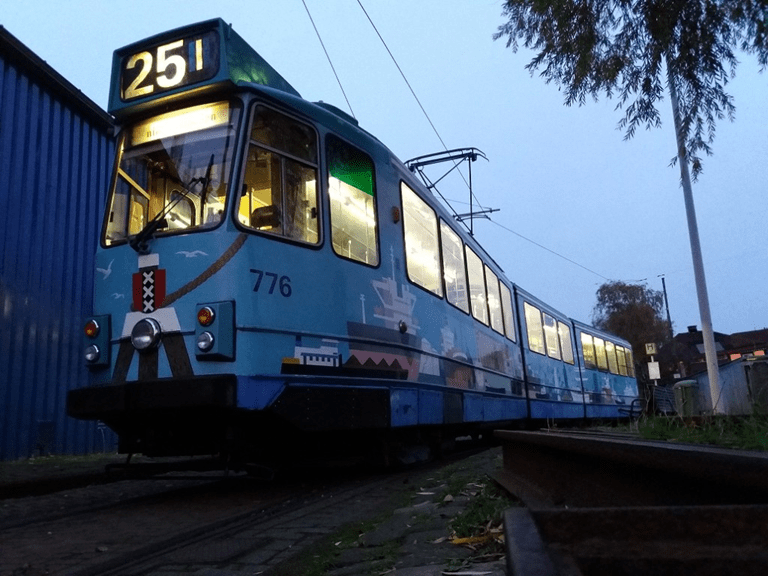
776 (MW)
The Amsterdam articulated trams of the 8G series, also known as “luchtwagens” (“air cars”), were a series of 55 double‑articulated trams (725–779; built in 1974–1975 by Linke‑Hofmann‑Busch) for use on the Amsterdam tram network. They operated from 1974 to 2003. Especially for Sail 1985, car 776 was repainted as the blue Haventram after undergoing repairs; its premiere took place at the Europaplein. Later, it became the first 8G tram to be fitted with anti‑vandalism seating.
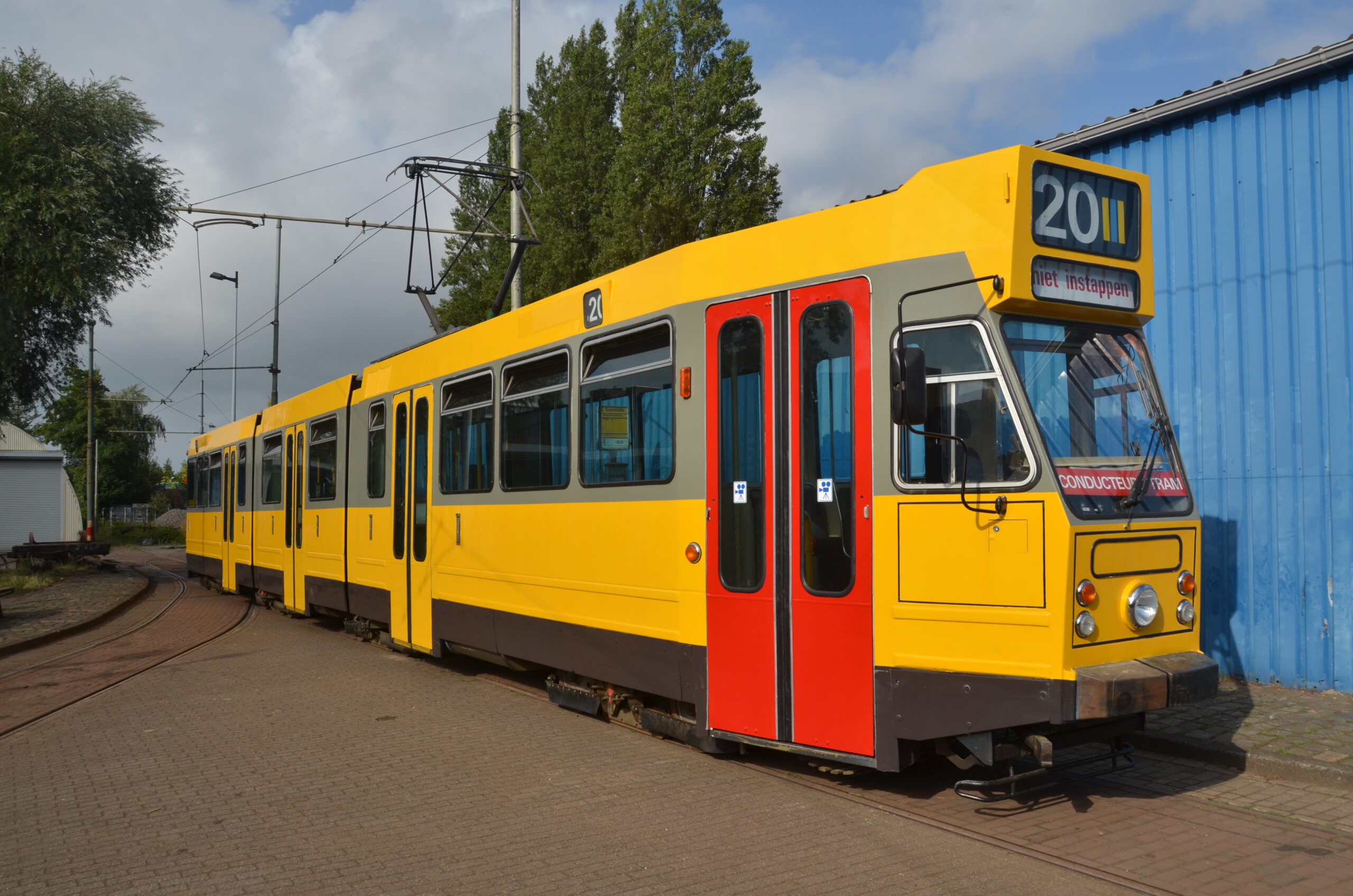
794
The Amsterdam articulated trams of the 9G and 10G series, also known as Blokkendozen (“boxcars”), were two series comprising a total of 37 trams built between 1979 and 1981 by the German railway manufacturer Linke‑Hofmann‑Busch for use on the GVB tram network. At the time, they were intended to replace the remaining three‑axle trams, a goal that ultimately proved unachievable. Between 2004 and 2016, they were the oldest trams still in regular service.
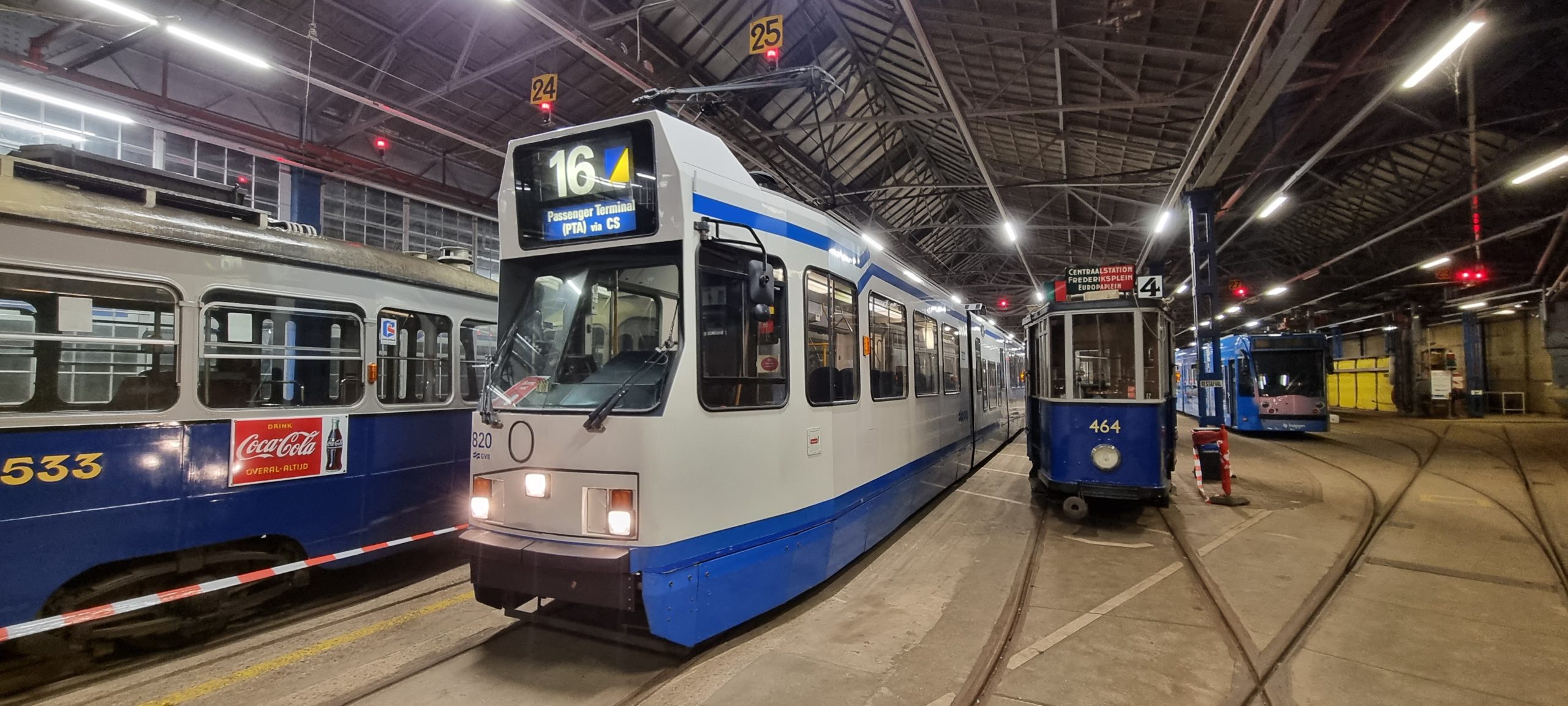
820
The Amsterdam articulated trams of the 11G and 12G series, also known as trapwagens (“step cars”) or hangbuiken (“sag‑bellies”), were two series comprising a total of 45 trams (20 of which were built as bi‑directional units). They were delivered between 1989 and 1991 by the Belgian manufacturer La Brugeoise in Bruges (now Bombardier Transportation). From early 2016 onwards, they were the oldest trams still in regular service. Withdrawal took place between January and July 2021. Car 820 is of the 12G type.
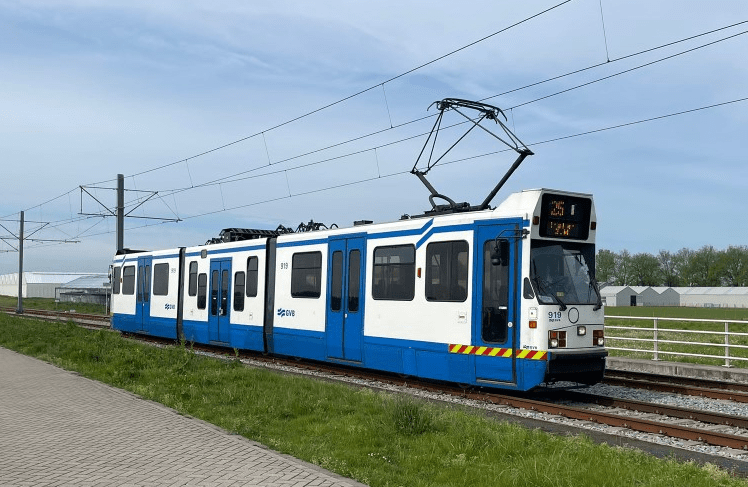
919
The Amsterdam articulated trams of the 11G and 12G series, also known as trapwagens (“step cars”) or hangbuiken (“sag‑bellies”), were two series comprising a total of 45 trams (20 of which were built as bi‑directional units). They were delivered between 1989 and 1991 by the Belgian manufacturer La Brugeoise in Bruges (now Bombardier Transportation). From early 2016 onwards, they were the oldest trams still in regular service. Withdrawal took place between January and July 2021. Car 919 is of the 11G type.
Works cars

RR2
The RR2, or Rail Cleaner 2, built in 1912. Part of the museum tram collection since 1978.
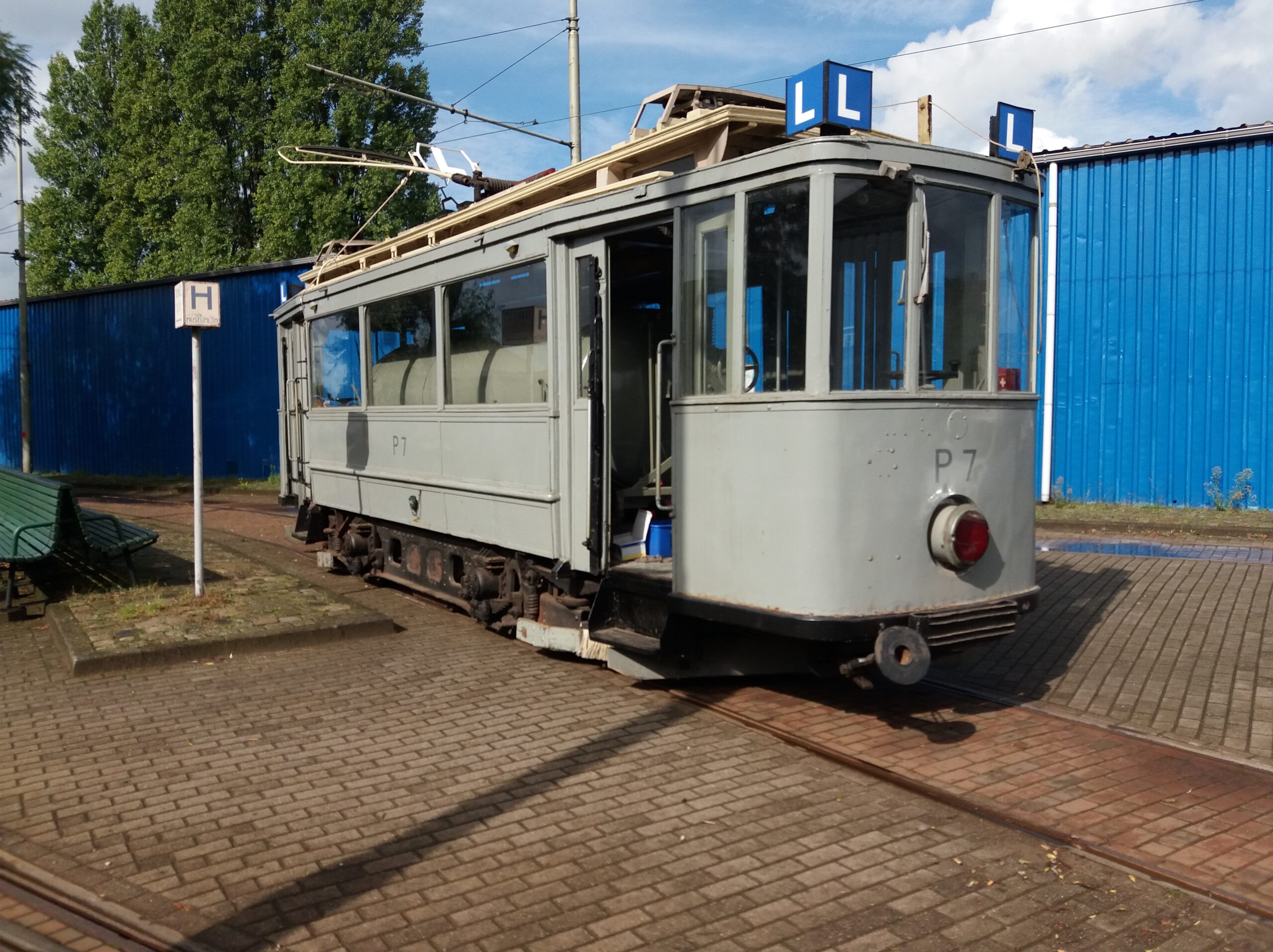
P7
The P7 is a brine‑spraying car, built in 1919 by Werkspoor and later converted into a brine car by Beijnes in 1958. It remained in service until 1989, after which it was withdrawn. At the Museum Tramway this tram is used for training purposes, but in winter—during snow and ice—the GVB still deploys it to spray brine on critical infrastructure.
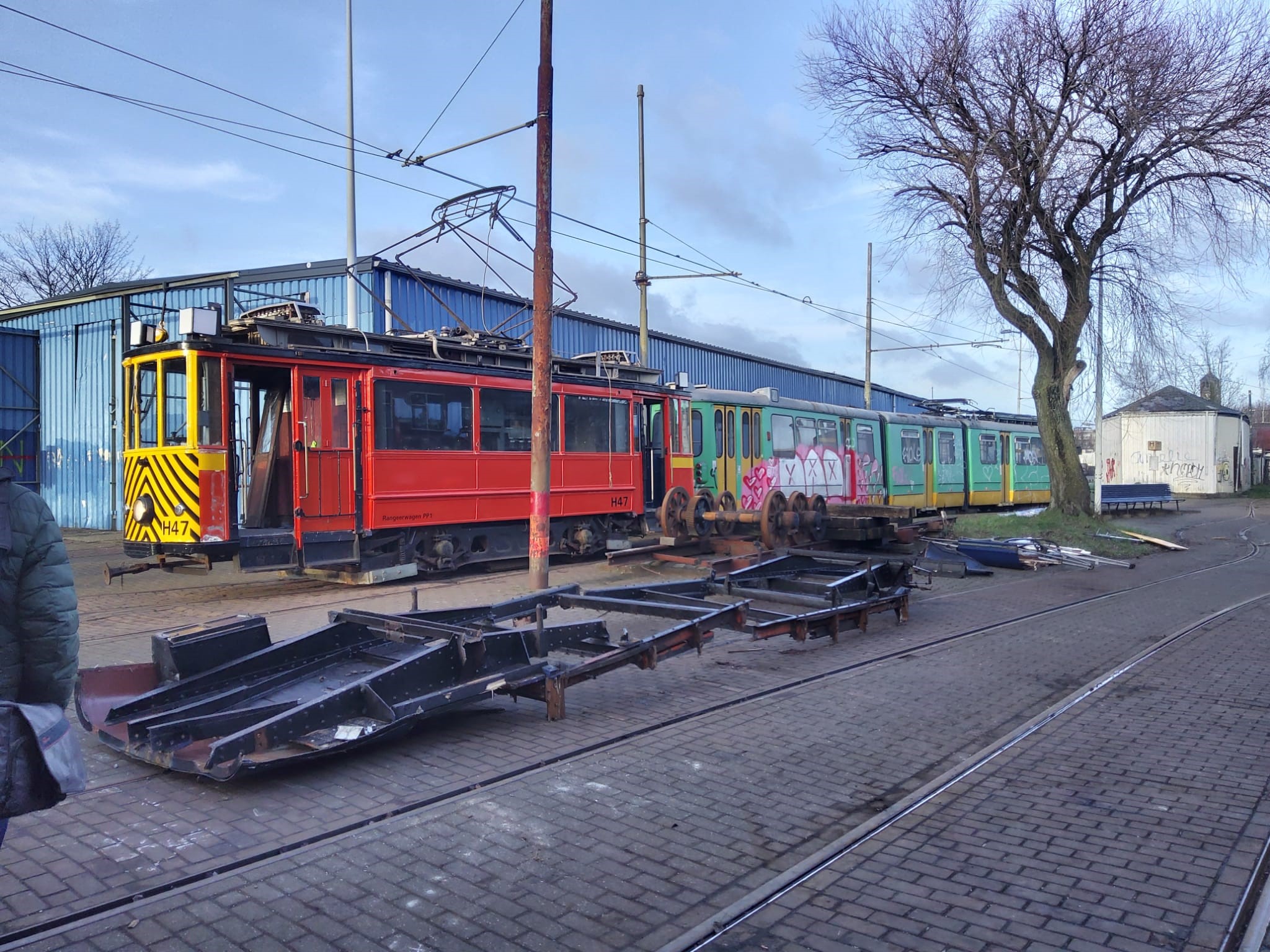
H47
The ex‑330 is our shunting car, equipped with a diesel engine and rectifier that allows it to operate without overhead power. The H47 has recently been overhauled and now has new axles with wider wheel flanges, which in theory makes it possible for it to run on the line again—something that had not been possible in recent years. The H47 can still operate on overhead power as well.
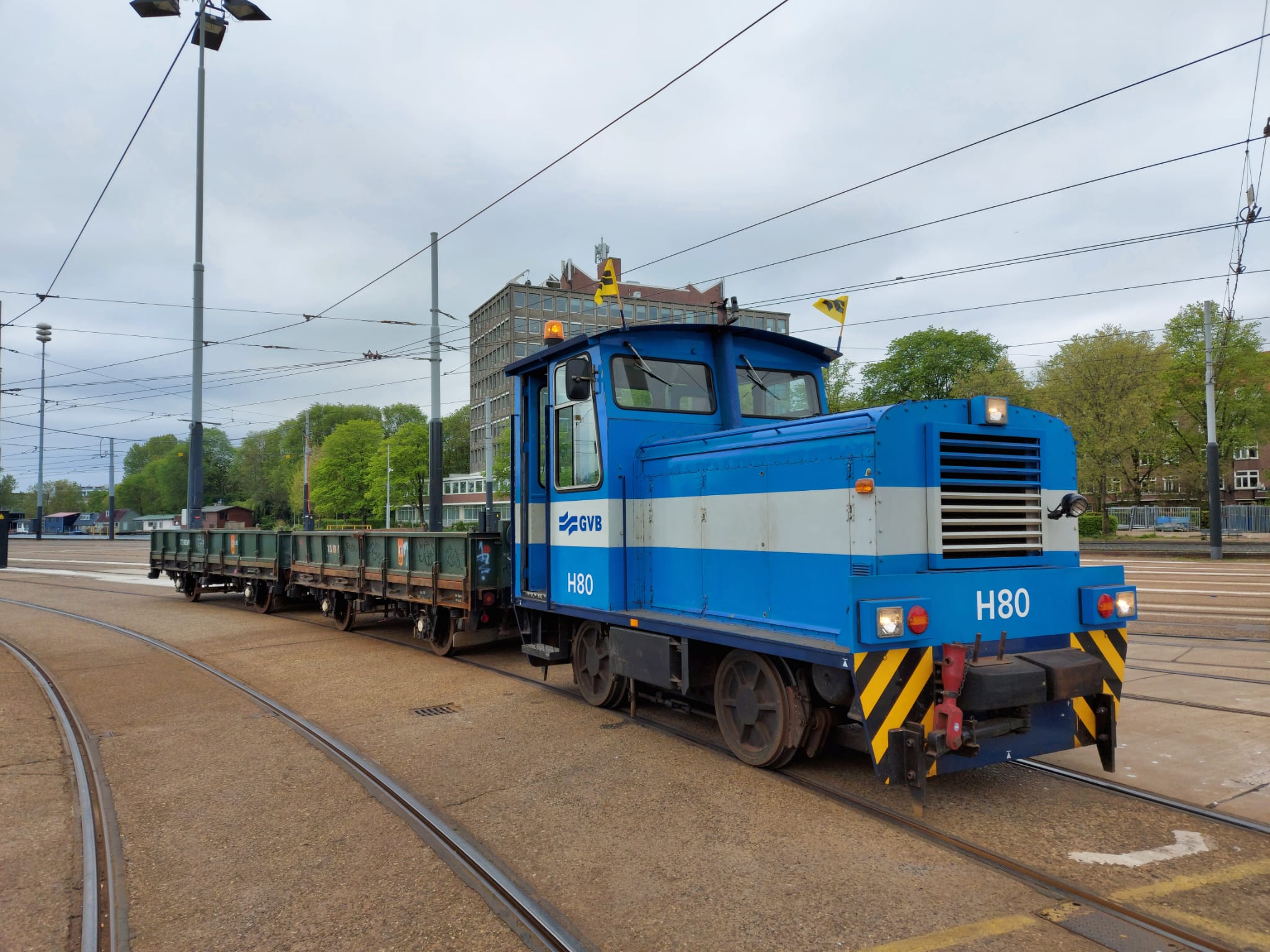
H80
The H80, a small shunting locomotive built in 1941 by Du Croo & Brauns, was taken into service by the GVB in 1986. It has been part of the Museum Tramway collection since 2010.
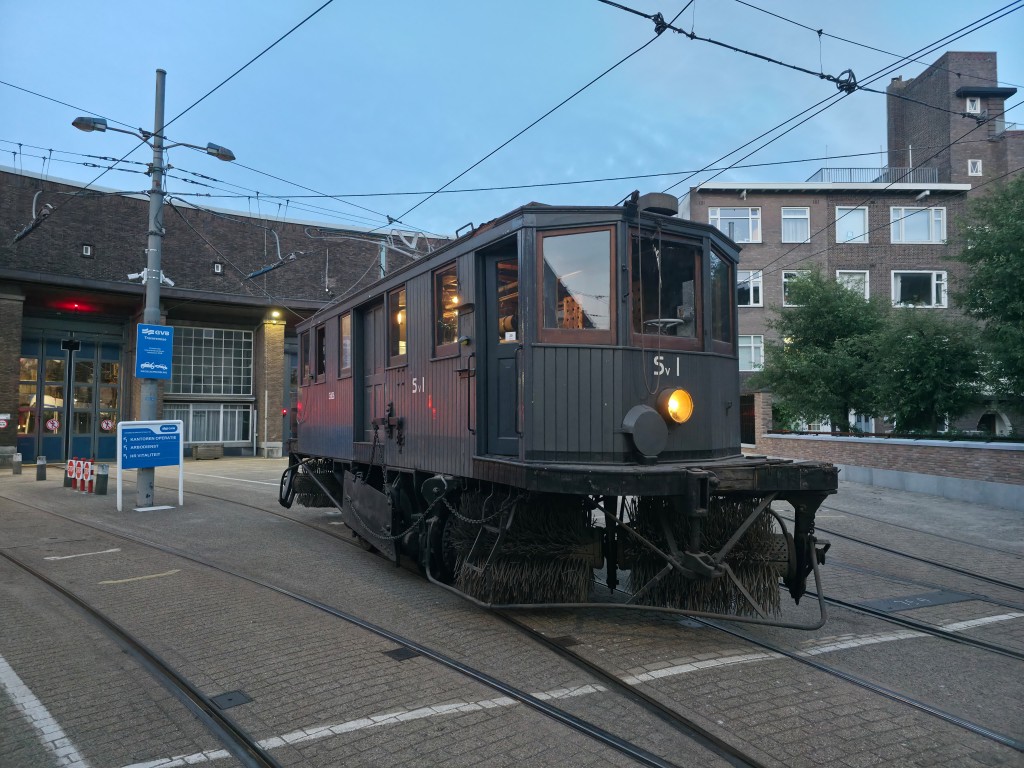
SV1
This American-built snow sweeper arrived in Amsterdam in 1905, where its electrical equipment was installed. With chain-driven rotating brushes, this tram cleared snow from the rails. The tram was withdrawn in 1968 and became part of the museum collection. Last week the tram was moved from Aalsmeer to the Lekstraat depot.
Metro
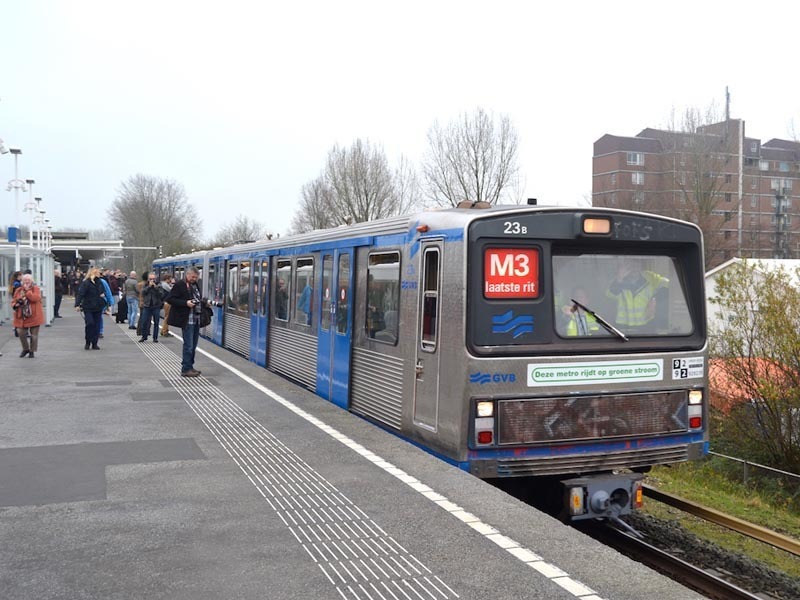
Zilvermeeuw
Zilvermeeuw (nickname, Silver Gull) unit 23, the only surviving trainset from Amsterdam’s very first metro trains, is being given a second life. At SBCAVM, this metro train is being restored so it can once again be presented to the public.
The Zilvermeeuwen—aluminium “tin cans” in 1970s style with a distinctive design cab—turned out to have a surprisingly robust steel frame beneath their skin. For an impressive 40 years they ran reliably between Amsterdam’s city centre and Zuidoost. Their introduction had a major impact on Zuidoost, which became closely connected to the rest of the city thanks to this fast new mode of transport. Just one year after opening, the metro line was already carrying twice as many passengers as originally forecast.
In the end, only unit 23 was saved from scrapping—and for good reason: it was the trainset used by Princess Beatrix and Prince Claus to officially open the line in 1977, and it also operated the very last passenger run in 2015.