Dutch trams
Browse restored trams, trailer cars and work equipment from Dutch cities and regional tramways outside Amsterdam.
Heritage from across the Netherlands
From Utrecht and Zeist to Groningen, Rotterdam and The Hague, each vehicle tells its own part of Dutch public transport history.
2 sections, 9 items
Choose a section directly or browse the full list.
Dutch Motor cars
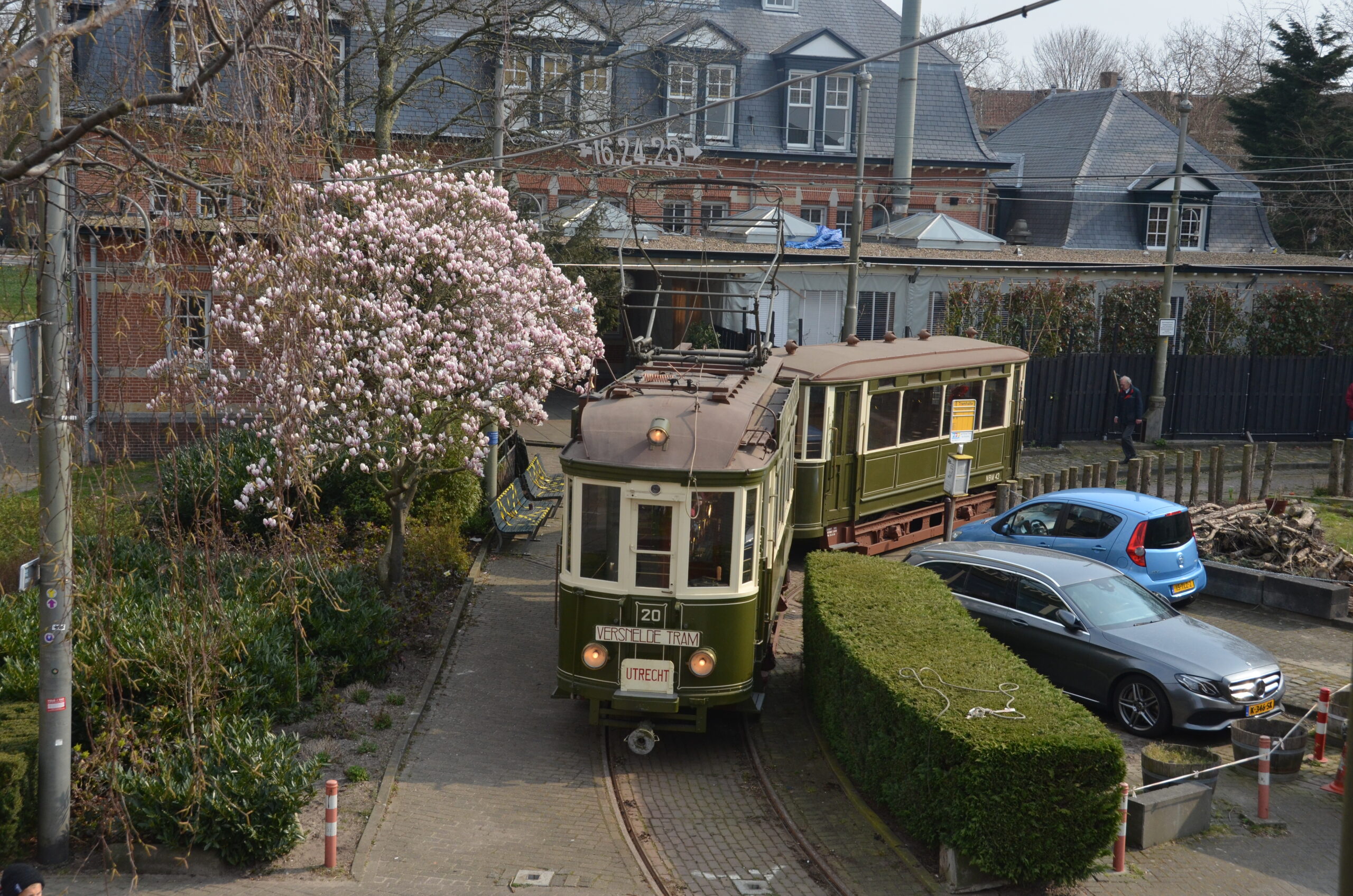
NBM 20
In 1910, the firm Allan & Co. of Rotterdam delivered four electric motor cars to the Ooster Stoomtram Maatschappij. They were numbered 20–23 and built for the 1,067 mm narrow‑gauge line from Driebergen Station to Zeist. Painted in a cream livery and equipped with a trolley pole, they offered seating for 20 passengers and standing room for 12. In 1923/1924 the motor cars were converted to standard gauge so they could operate on the Utrecht–Zeist line.
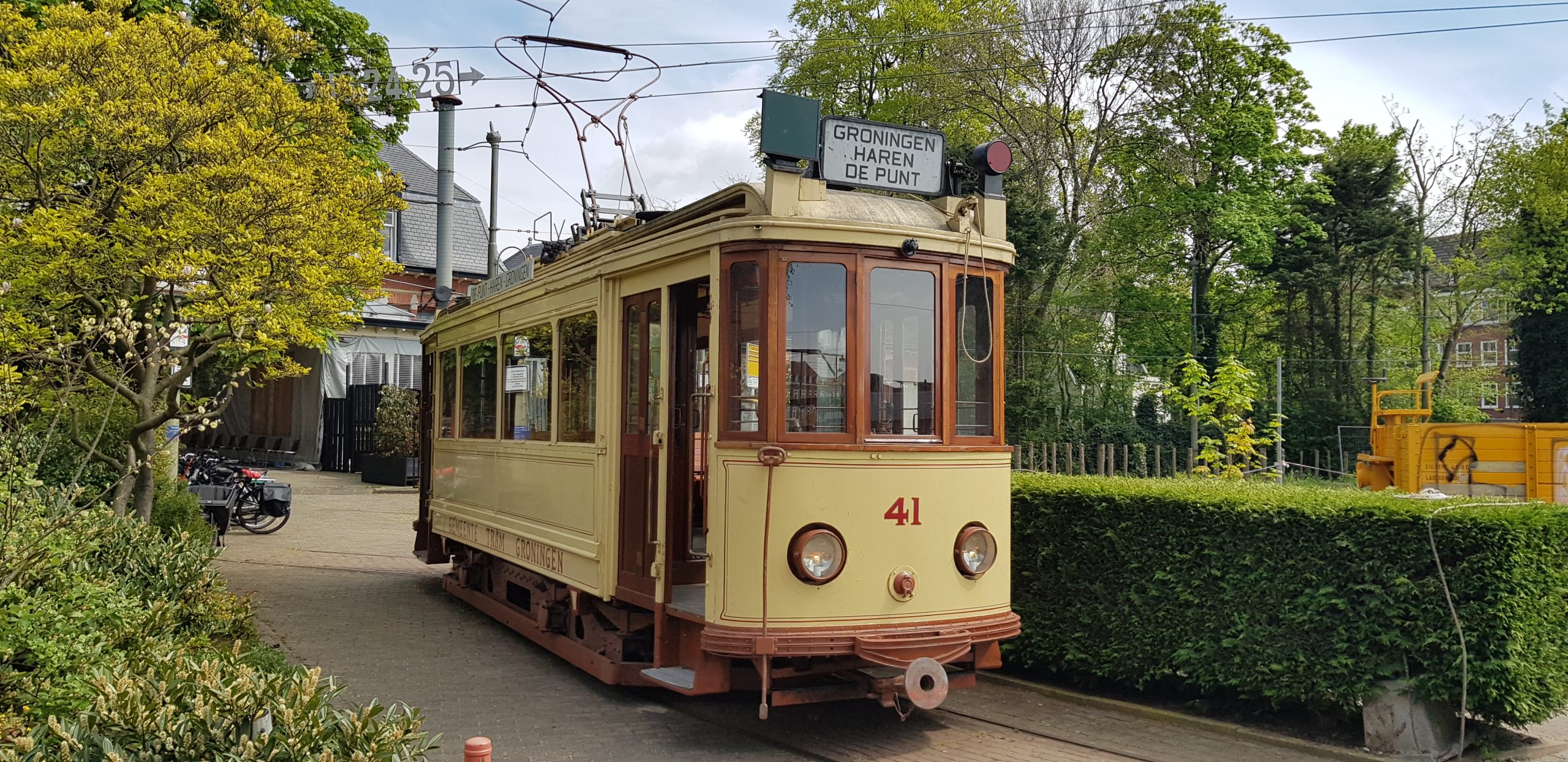
GTG 41
The motor car is a replica, created from The Hague motor car 267, which comes from the same construction series at HAWA as GTG cars 36–42. The original motor car 41 was part of the series 36–42 delivered by HAWA to the Municipal Tramway of Groningen. When the Groningen transport company prepared to celebrate its 75th anniversary in 1981, it regretted that none of the original Groningen trams had survived. On 22 November 1980, The Hague car H16 was transferred to Groningen at their request, where it was transformed within a few months into the cream‑coloured Groningen motor car 41. The vehicle is now standard‑gauge instead of metre‑gauge. During the anniversary celebrations in March 1981, the tram was displayed next to the Martini tower.
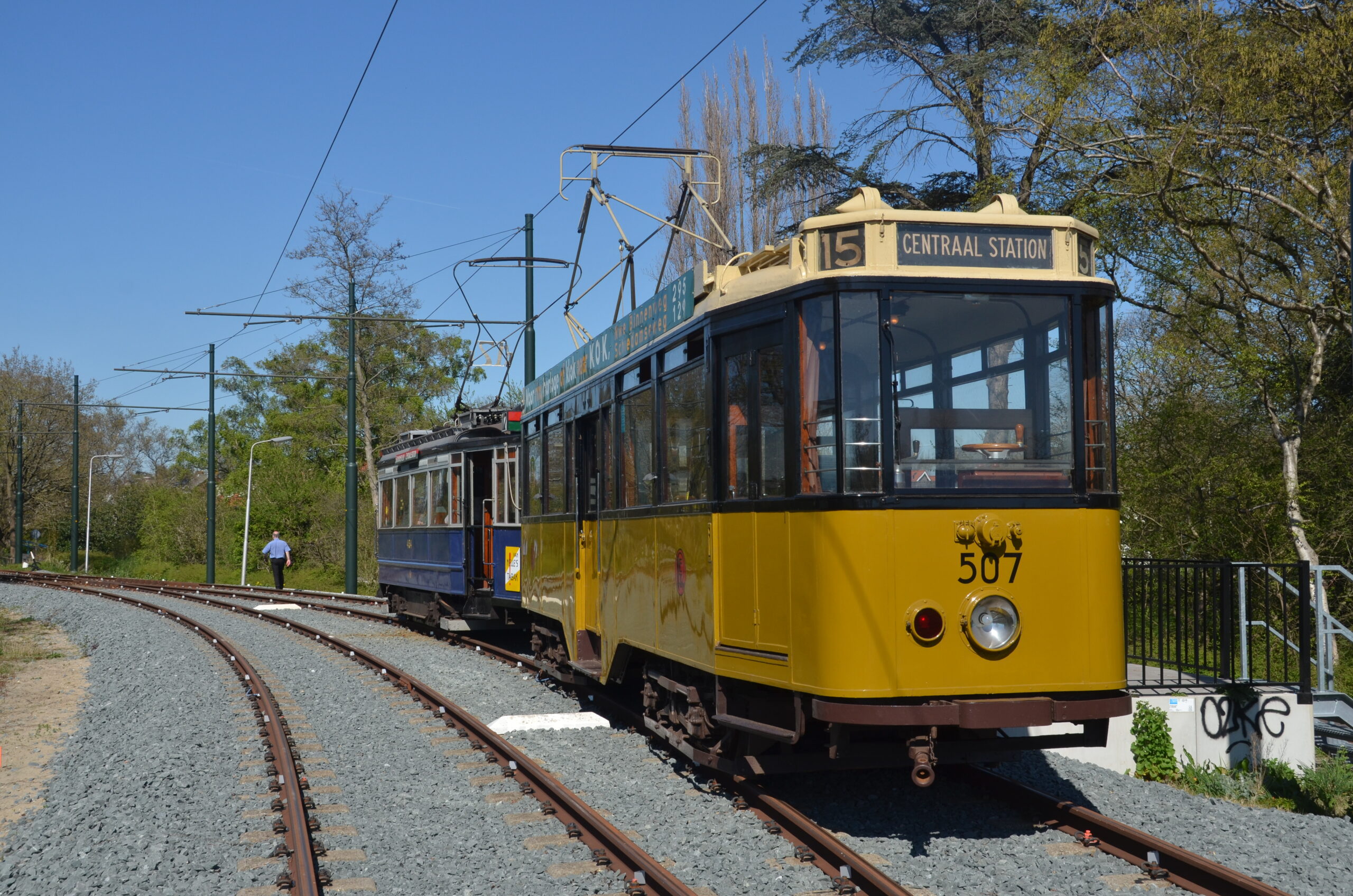
RET 507 (Rotterdam)
Around 1930, much more new rolling stock was needed to carry out the ambitious plans of the RET management, especially since the oldest cars were due for replacement. In the course of 1931, one hundred cars were delivered to the RET, entering service as numbers 471–570, continuing the sequence of their predecessors. These cars, built by Allan, Beijnes and Werkspoor, naturally differed little from the vehicles delivered in 1929. The new cars were slightly longer, but more importantly, they had more powerful motors, making them better suited for hauling trailers.
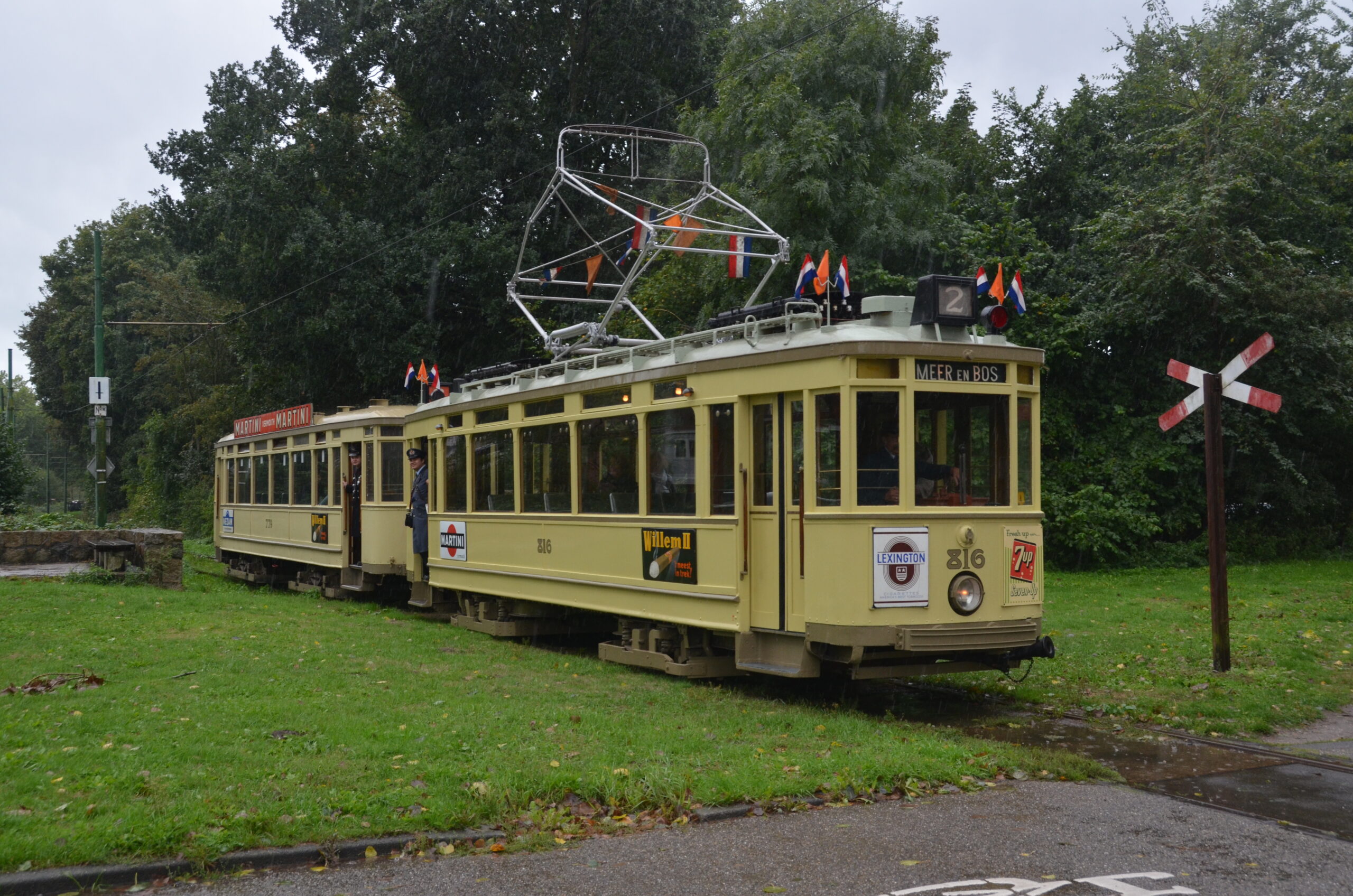
HTM 816 (The Hague)
In 1926, following the order for motor cars 801–815 from Allan & Co. in Rotterdam, the HTM placed an additional order for five more type‑800 motor cars. After its delivery on 16 March 1927, car 816 entered service on the fast tram line 11 (Hollands Spoor Station – Hotel Zeerust). On 9 May 1977 the car was transferred to the EMA, where it was restored in 1986 to its 1930s appearance.
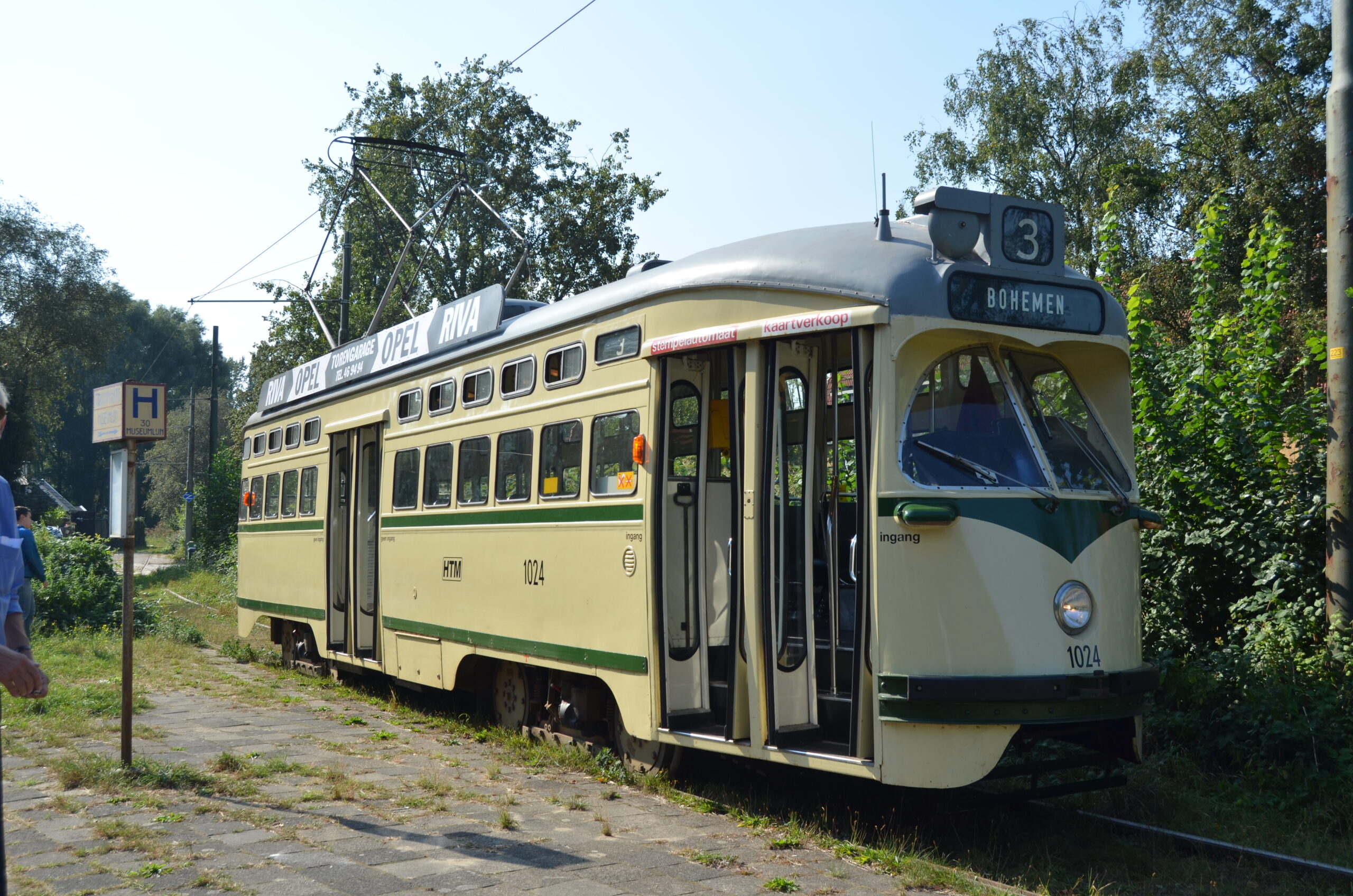
HTM 1024 (The Hague)
After two prototype PCC cars had undergone trials in The Hague, a further 22 PCC cars were ordered in 1950 from La Brugeoise in Bruges. Following the two prototypes, these cars were numbered 1003–1024. Car 1024 was delivered on 6 November 1952 to the unloading site at Delftselaan in The Hague. It offered seating for 36 passengers and standing room for 57.
Dutch trailercars
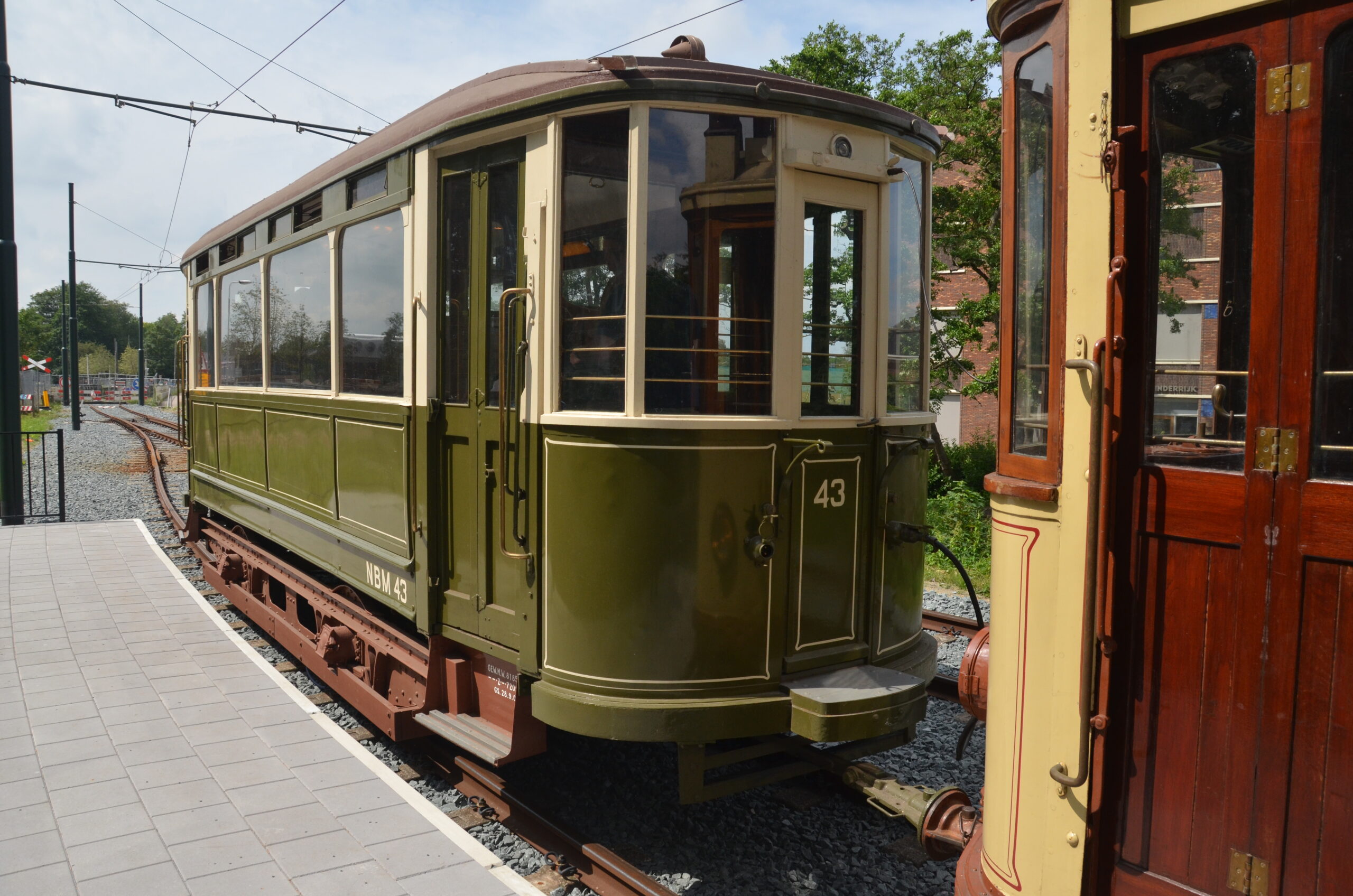
NBM 43
The Netherlands Local Railway Company (NBM) ordered several small series of vehicles for the operation of its electric tram network. Closed trailer car 43 comes from a series of two vehicles, numbered 42–43, built in 1915. From the outset, the trailer was fitted with transverse benches, with a longitudinal bench for two passengers in each corner. In total, the trailer could carry 20 seated and 15 standing passengers.

NBM 55
Built in 1917 by Werkspoor, this former GVB 778 is now preserved as NBM 55. An original drawing from the OSM (Ooster Stoomtram Maatschappij) was used as a reference for this unique restoration. The car is regularly operated behind NBM 20 whenever needed.
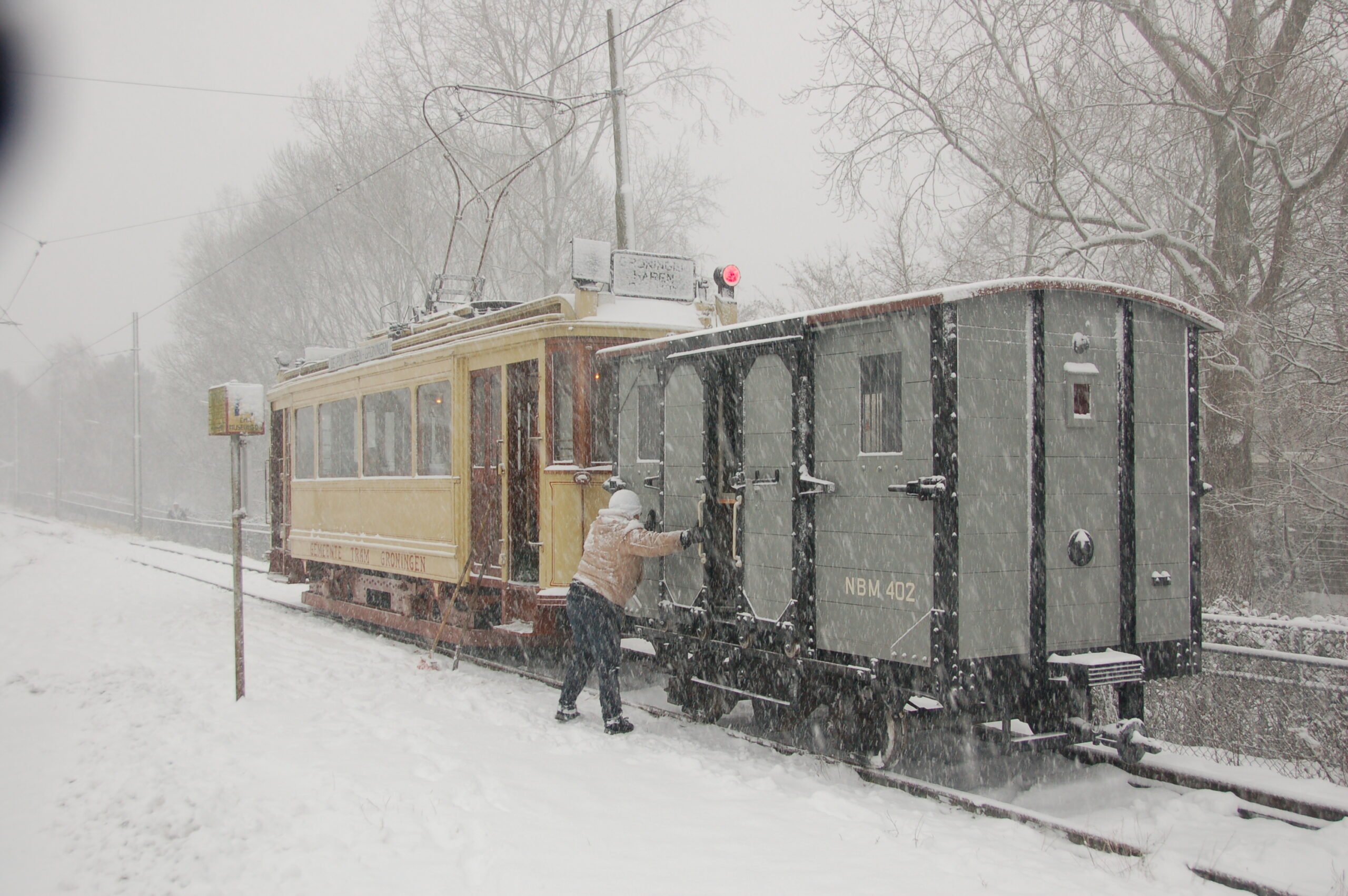
NBM 402
From 1911 until September 1944, the NBM operated short freight tram services twice a day between Zeist and Utrecht. These consisted of a motor car and two freight wagons, which were unloaded on a siding. When the tramway was closed in 1949, all freight stock was scrapped.
The replica 402 was created from two similar freight wagons (A43 and A44) from the tramway system of the city of Bonn. Several modifications were made to transform the wagon into an authentic NBM freight car. Its appearance reflects the condition of 1937.
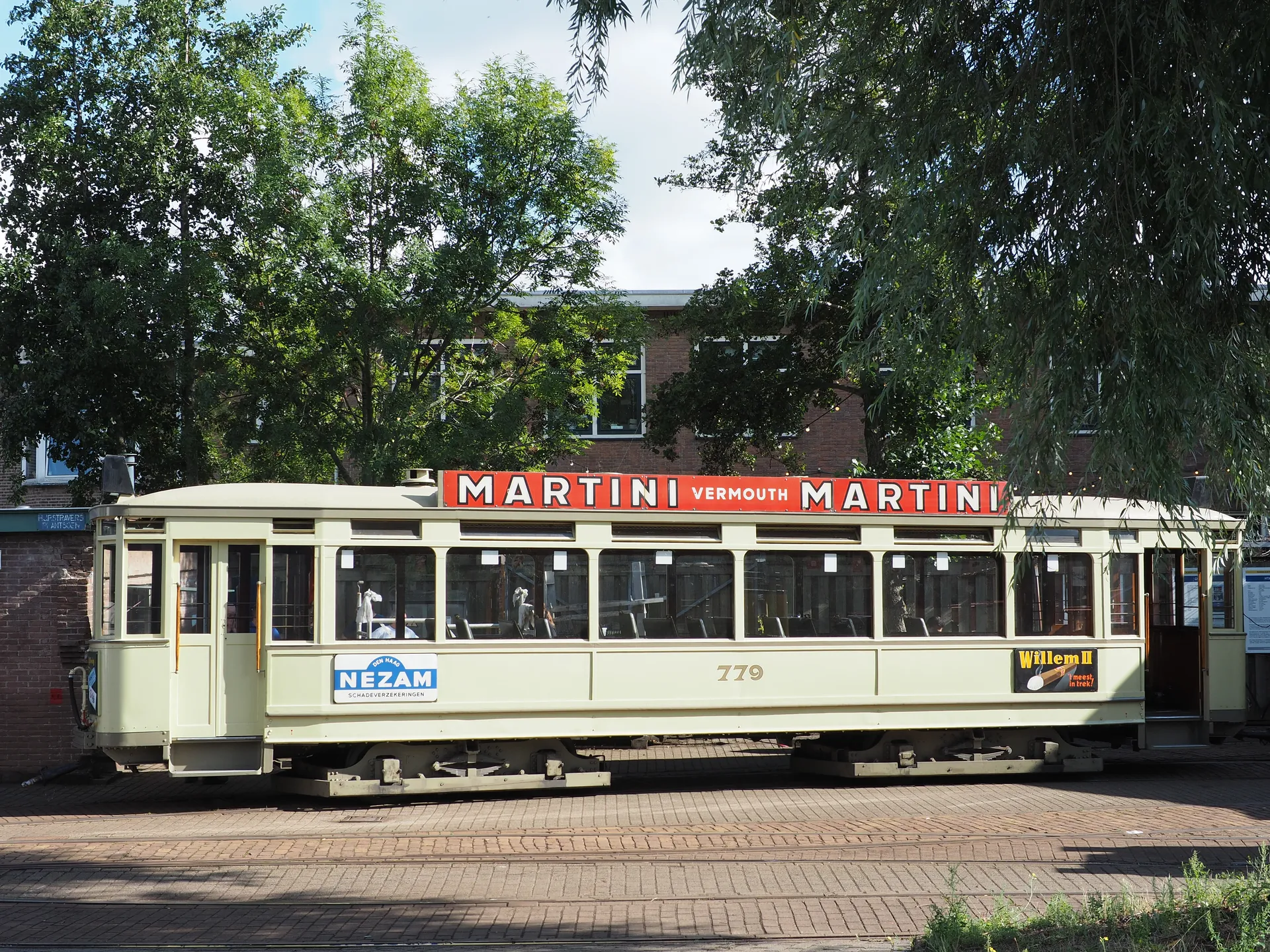
HTM 779
In 1929, the Belgian rolling‑stock manufacturer La Brugeoise et Nicaise et Delcuve delivered thirty trailer cars to the HTM, including no. 779. These long four‑axle trailers remained in service until the very end of trailer operations on the HTM city network. In 1948, sixteen of these cars—including 779—were fitted with a Westinghouse air‑brake system so they could operate behind the new “Swiss” motor cars built by Werkspoor, and, when required, on the suburban lines that had by then also been equipped with the same braking system.
When the HTM stopped using trailers after 1965, cars 779 and 780 were transferred for several years to the Museum Steam Tram Hoorn–Medemblik, where they received the nicknames Amalia and Dora. In 1977, car 779 was moved to the Electric Museum Tramway Amsterdam to be restored there by a dedicated volunteer group.