Sustainability
The Museum Tram Line Amsterdam is a socially responsible organization.
In addition to preserving, restoring, and operating historic rolling stock, we aim to create positive impact in both the social and sustainability domains. These ambitions are firmly embedded in our business plan.
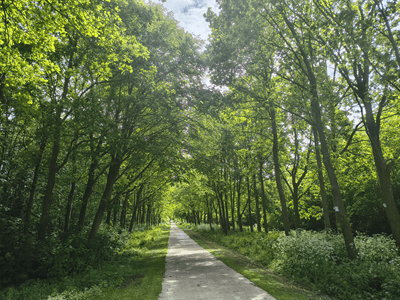
Sustainable, Connecting Heritage
The Museum Tram Line offers a community space for volunteers, where knowledge and experience in (mobile) cultural heritage are shared. Our workshop and trams are strong examples of reuse and circular craftsmanship. During restoration work, we use water‑based paints wherever possible and synthetic oils for lubrication. Naturally, all our trams run—whenever possible—on 100% green electricity.
Our own railway line reflects the history of energy transitions in rail transport: from steam (1915), to diesel (1954), to electric power (1975), and finally to green electricity (2015). We also practice sustainable green maintenance. Did you know that our tramway forms an important ecological corridor? It connects no fewer than five parks and the Amsterdam Forest. Because of this, we work closely with ecologists from Amsterdam and Amstelveen to support the vulnerable biodiversity along the line.
The Museum Tram Line is a unique combination of cultural‑historical heritage and sustainability. We bring preservation, awareness, cooperation, education, and enjoyment together. This is a significant responsibility. For that reason, we increasingly seek collaboration with social organizations and public authorities to further strengthen and promote these sustainable values and objectives.
Highlights:
- Use of green energy
We use the grid to reduce the ecological footprint of our vintage trams. - Education and awareness
The museum tram line offers an educational experience about the (history of) environmentally friendly transport, to promote awareness of sustainable travel. - Preservation of historical vehicles
The museum tram line contributes to the preservation of cultural heritage and prevents waste of materials by reuse and restoring historical trams and railway. - Local cooperation
The museum tram line strives for optimal cooperation with local manufacturers and suppliers for maintenance and restoration. - Waste management and recycling
The museum tram line implements waste management and recycling programs within the organization, such as recycling parts and materials from its old trams and railway to minimize waste.